
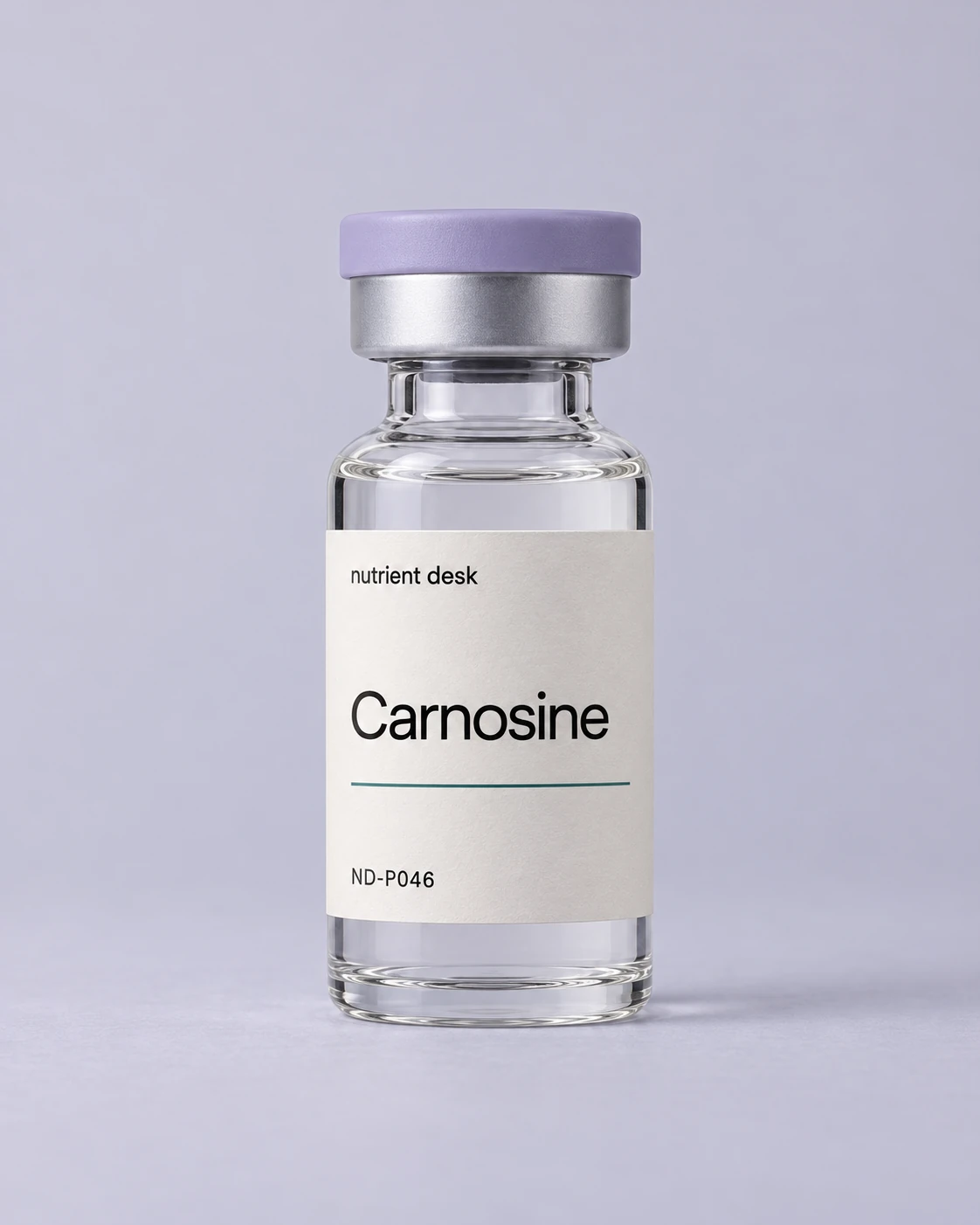
CarnosineNaturally occurring dipeptide
Carnosine combines two amino acids, beta-alanine and histidine. It occurs naturally in the body and appears in both nutritional products and cosmetics, where the research questions are quite different.
What is Carnosine?
Carnosine is a dipeptide made from beta-alanine and histidine. It occurs naturally in the body and appears in supplements and skincare products.
How it works
It participates in buffering and can interact with reactive compounds. In skincare, interest centres on processes such as oxidation and glycation, which can affect proteins.
Effects studied
Skin ageing processes
The retained research discusses biological processes relevant to skin ageing. A laboratory effect on oxidation or glycation does not quantify a visible reduction in wrinkles from a finished cream. 1
Evidence: Mechanistic research context; product-level appearance benefit requires separate evidence.
What does the evidence show?
The archived skin reference concerns biochemical effects relevant to ultraviolet exposure. It should not be presented as proof that a cream prevents skin ageing or replaces sunscreen.
A molecule with several biological roles
Carnosine can participate in buffering and interact with reactive chemical compounds. These properties make it interesting to researchers studying muscle physiology and cellular stress. A molecule having useful functions inside the body does not automatically mean that adding more through a cream or capsule improves a clinical outcome.
Why it appears in skin products
Cosmetic explanations often focus on oxidation and glycation, processes that can affect proteins. Laboratory findings can show that an ingredient influences one of those processes under experimental conditions. They do not tell us how much of the ingredient reaches living skin or whether users see a meaningful difference over time. 1
Keep the routes separate
A topical formula is not equivalent to swallowing carnosine, and neither is the same question as taking beta-alanine to alter muscle carnosine. The route, metabolism and study outcome differ. Using a sports-nutrition paper to support an anti-wrinkle cream would skip those distinctions.
What a cosmetic study would need to show
For a cosmetic, the strongest relevant evidence would assess the finished product against a suitable control in people. Improvements in a chemical marker should be named as such. Skin irritation and the other ingredients also matter; an antioxidant label alone does not establish either effectiveness or tolerability.
Safety & status
Topical tolerability depends on the complete formula. Antioxidant language should not be interpreted as a substitute for ultraviolet protection.
Country and product status
This introduction describes the molecule and its research context. Product availability, approved indications and eligibility in Germany and Switzerland require a current local product check; they are not established by an overseas study or an online listing.
Frequently asked questions
Is carnosine the same as beta-alanine?
No. Beta-alanine is one component of the carnosine molecule; research on one is not automatically evidence for the other.
Can an oral study establish the benefit of a carnosine cream?
No. Route, delivery and measured outcome need to match the product claim.
Further reading
Sources
This entry was rewritten from our research archive. References below are reading leads unless a completed check is explicitly noted; a full independent evidence and regulatory review is still pending.
- Carnosine: paper 10.1111/php.13850 Research reference · Retained archive reference; not independently checked for this draft.
Research provenance
This name was discovered in the Superpower peptide index, archived 26 October 2026. Its ratings and reviewer attribution have not been adopted as our own. The archive informed this original editorial draft; independent source review is still pending.