
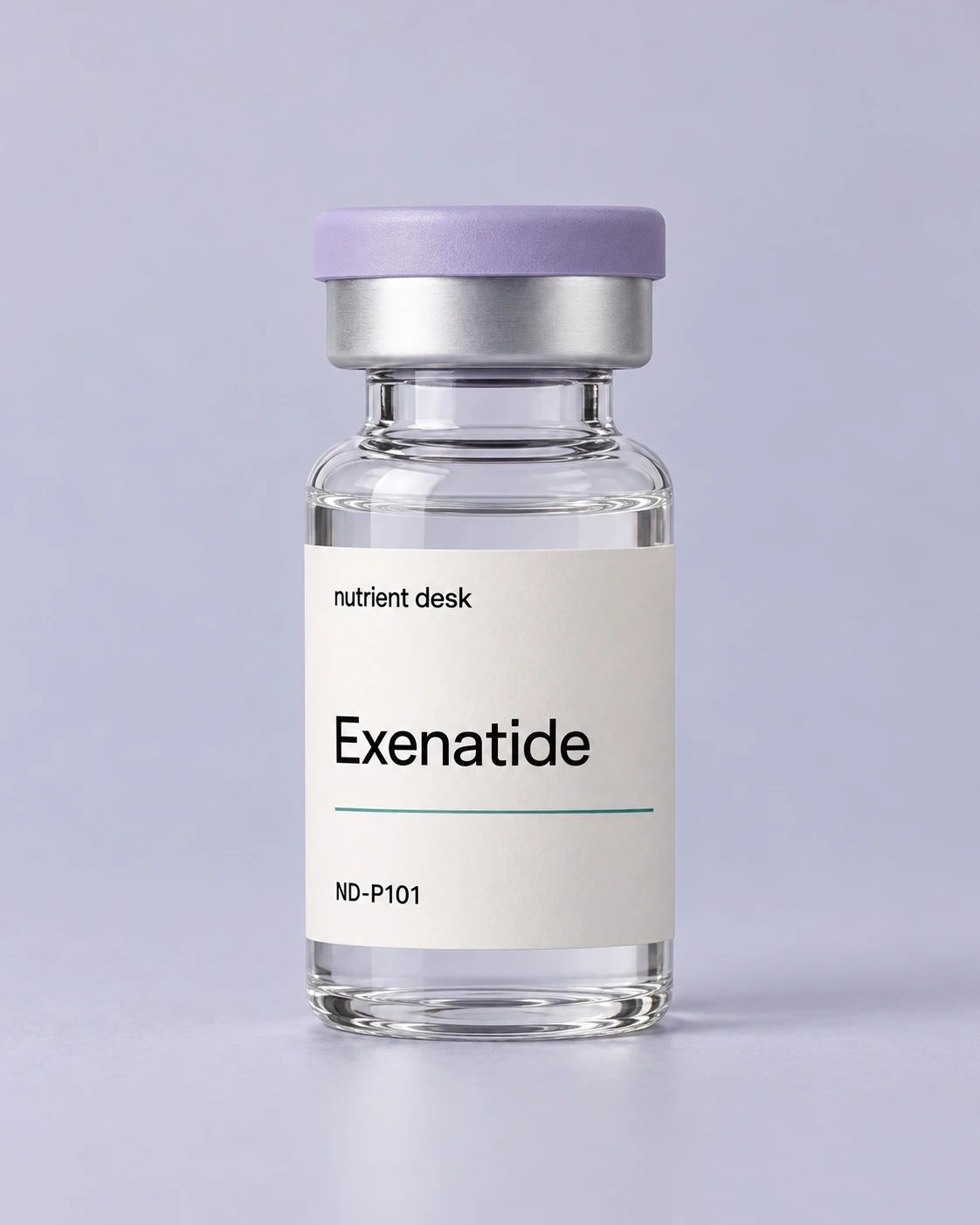
ExenatideGLP-1 receptor agonist medicine
Exenatide is a GLP-1 receptor agonist developed for type 2 diabetes. Different formulations change its exposure over time, making the product and study design essential to interpreting its effects.
What is Exenatide?
Exenatide is an exendin-4-based GLP-1 receptor agonist developed for type 2 diabetes. Shorter-acting and extended-release formulations create different patterns of exposure. 1 2
How it works
GLP-1 receptor activation influences glucose-dependent insulin secretion, glucagon and gastric emptying. These actions affect glucose regulation, including around meals. 1
Effects studied
What does the evidence show?
Diabetes clinical programme; archived references retained
One of the earlier GLP-1 approaches
Exenatide is based on exendin-4 and activates the GLP-1 receptor. It influences glucose-dependent insulin secretion, glucagon and gastric emptying. These actions help explain its relevance to blood-glucose control, particularly around meals, without turning it into a general treatment for every metabolic complaint.
The formulation changes the pattern
Shorter-acting and extended-release products expose the body differently. Frequency of administration is only the visible part of that difference. The effects on fasting glucose, meal-related glucose, gastrointestinal symptoms and injection-site reactions can depend on the formulation studied.
Which trial results apply to exenatide?
Trials of other GLP-1 agonists are sometimes discussed beside exenatide, but they should not be treated as direct evidence for it. Cardiovascular outcomes in particular require the molecule, formulation and patient population to be identified. A class-level explanation is useful background, not a replacement for the specific trial.
Practical context matters
Gastrointestinal effects, kidney function and concurrent glucose-lowering treatment are important considerations. Product availability has also changed in some markets, so a historical label does not confirm current supply. Exenatide has its own clinical evidence and a place in the development of GLP-1 treatment. That history does not establish that every formulation remains available or interchangeable today.
Safety & status
Gastrointestinal effects, kidney function and accompanying diabetes treatment matter. Injection-site reactions and other treatment experiences can differ between formulations. 1
Country and product status
Country-specific product availability and authorisation require a separate current check.
Frequently asked questions
Are short-acting and extended-release products interchangeable?
No. Their exposure profiles and instructions differ, even though the active molecule is the same. 1
Can benefits of another GLP-1 drug be assumed here?
No. Cardiovascular and other outcome claims need exenatide-specific evidence identifying the formulation and population.
Further reading
Sources
This entry was rewritten from our research archive. References below are reading leads unless a completed check is explicitly noted; a full independent evidence and regulatory review is still pending.
- Exenatide · retained archive reference Archive research lead · Retained archive reference; not independently checked for this draft
- Exenatide · retained archive reference Archive research lead · Retained archive reference; not independently checked for this draft
Research provenance
This name was discovered in the Superpower peptide index, archived 26 October 2026. Its ratings and reviewer attribution have not been adopted as our own. The archive informed this original editorial draft; independent source review is still pending.