
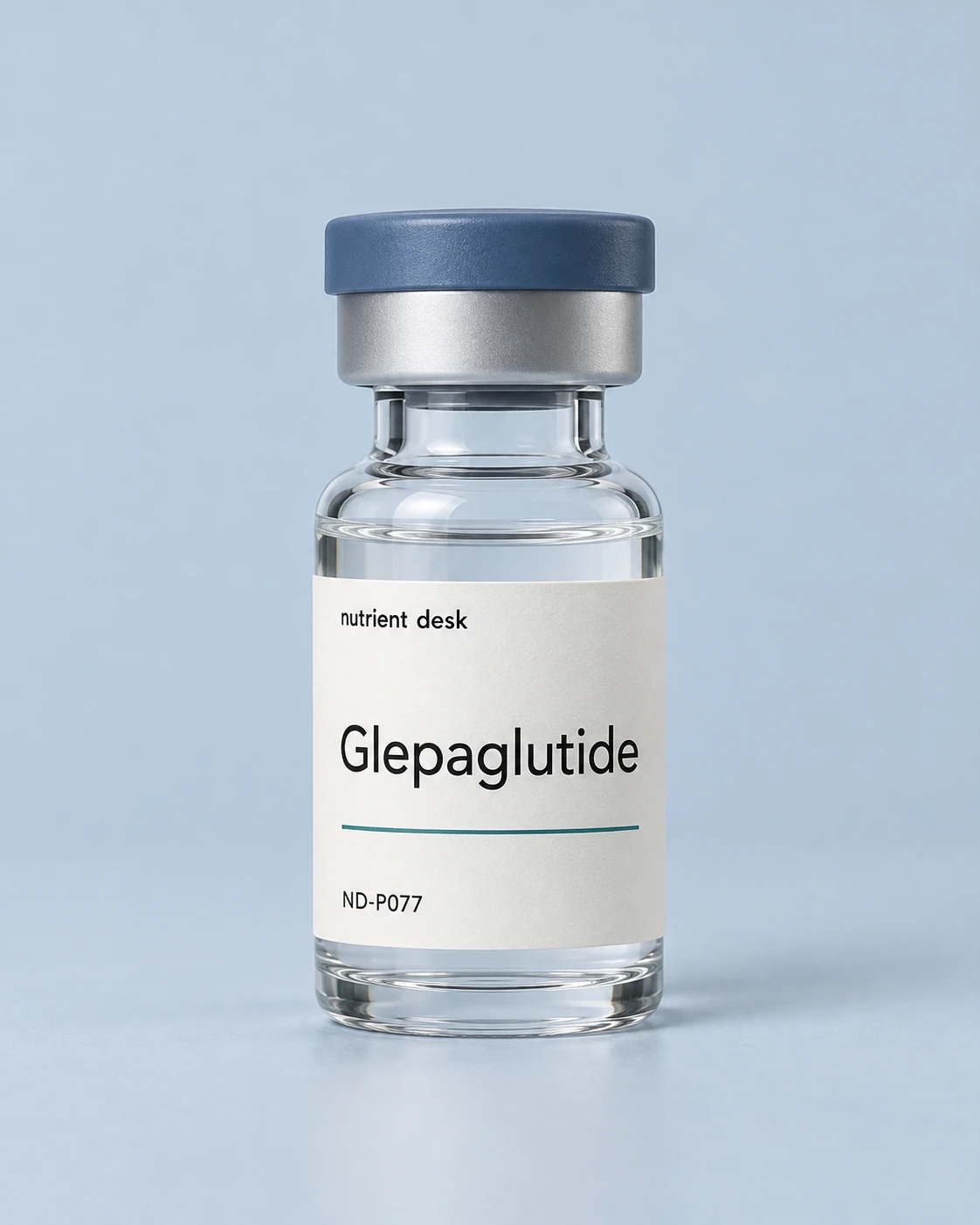
GlepaglutideGLP-2 analogue in clinical research
Glepaglutide has been studied in short bowel syndrome with intestinal failure. A randomised trial found reduced parenteral-support needs with one tested regimen, but not the other.
What is Glepaglutide?
Glepaglutide is a long-acting GLP-2 analogue investigated for short bowel syndrome with intestinal failure.
How it works
GLP-2 activity is intended to improve the absorptive function of the remaining intestine and reduce parenteral-support needs.
Effects studied
Intravenous support
A 24-week phase 3 study included 106 participants. The twice-weekly group reduced support volume more than placebo; the once-weekly comparison was not statistically significant. 1
Evidence: Randomised evidence with different results across study schedules; these schedules describe the trial, not a personal regimen.
What does the evidence show?
Randomised phase 3 short bowel syndrome trial
What intravenous support means for daily life
When the bowel cannot absorb enough, intravenous support can occupy several days each week. Glepaglutide is a long-acting GLP-2 analogue intended to improve absorption. Reducing support can therefore mean a practical change in daily life, not just a better laboratory number.
What the controlled trial found
The phase 3 trial included 106 participants and compared two schedules with placebo over 24 weeks. The twice-weekly group reduced weekly support volume more than placebo. The once-weekly group did not show a statistically significant difference on the primary endpoint. 1
Reduction is different from independence
Some participants reduced the number of support days, and a smaller group became independent of parenteral support. These outcomes should remain distinct. A headline saying the treatment “restores gut function” would obscure the range of responses and the fact that many participants still required support.
The clinical team adjusts the balance
Support reductions in the trial followed measurements of fluid balance. Outside that context, simply reducing an infusion could cause dehydration or nutritional problems. Longer follow-up is needed to understand durability and less common harms. The benefit in this condition depends on the regimen, remaining bowel anatomy and monitoring. The findings do not establish a general treatment for gut health.
Safety & status
Hydration and nutritional status require close assessment as absorption and support requirements change. Longer follow-up is needed for less common risks.
Country and product status
Country-specific product availability and authorisation require a separate current check.
Frequently asked questions
Does reduced support mean complete independence?
No. Support volume, days requiring support and complete independence are separate outcomes. 1
Did both study schedules show the same result?
No. The twice-weekly comparison met statistical significance for support-volume reduction; the once-weekly comparison did not. 1
Further reading
Sources
This entry was rewritten from our research archive. References below are reading leads unless a completed check is explicitly noted; a full independent evidence and regulatory review is still pending.
- Jeppesen et al. · Glepaglutide phase 3 trial Primary trial abstract · Primary trial abstract checked 27 October 2026; full paper and supplementary data not independently reviewed.
- Glepaglutide · retained archive reference Archive research lead · Retained archive reference; not independently checked for this draft
- Glepaglutide · retained archive reference Archive research lead · Retained archive reference; not independently checked for this draft
Research provenance
This name was discovered in the Superpower peptide index, archived 26 October 2026. Its ratings and reviewer attribution have not been adopted as our own. The archive informed this original editorial draft; independent source review is still pending.