
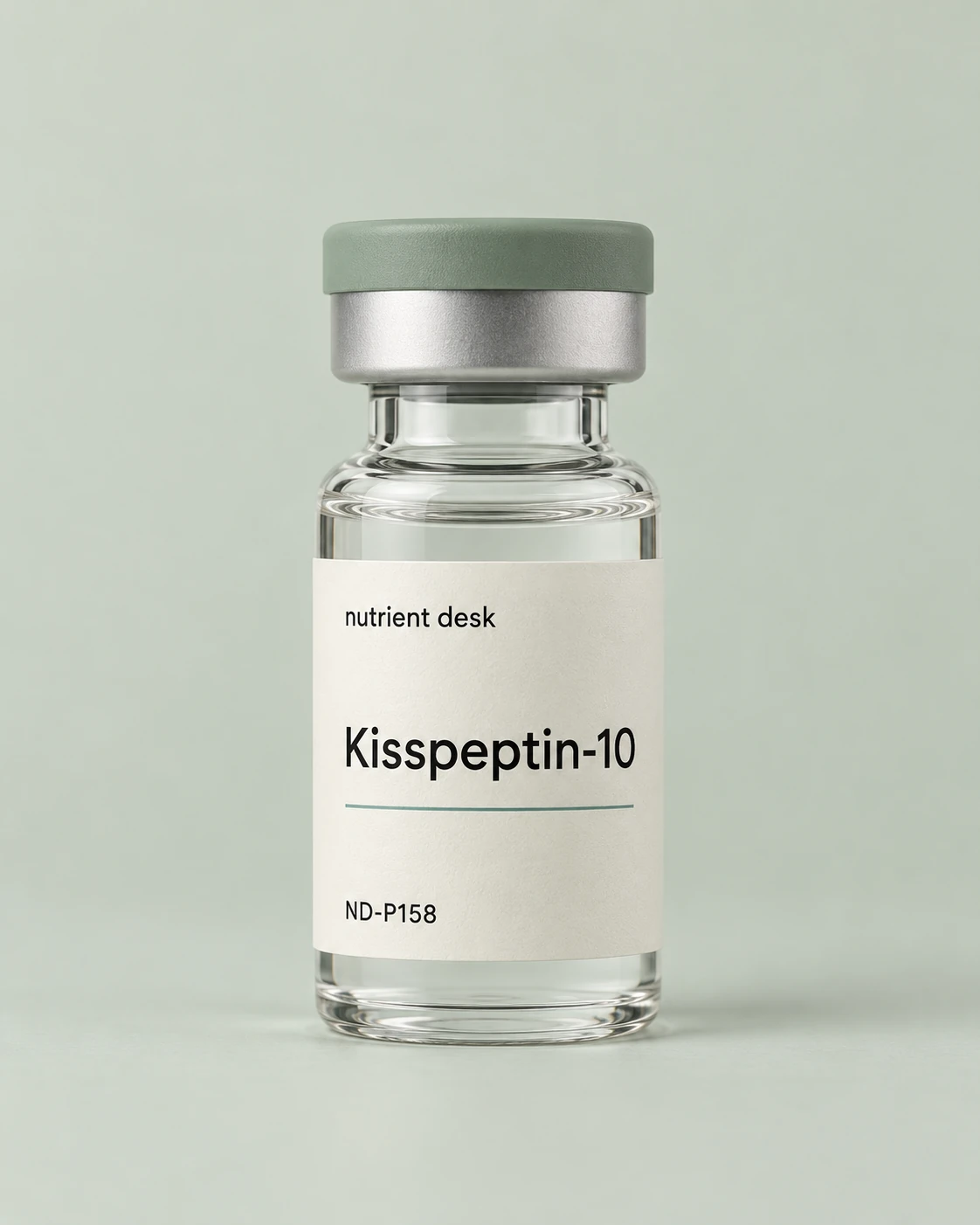
Kisspeptin-10KISS1-receptor agonist · research
Kisspeptin-10 activates a pathway upstream of GnRH and reproductive hormones. Early human work is informative, but hormone responses and laboratory measures are not the same as proven fertility or sexual-wellbeing benefits.
What is Kisspeptin-10?
Kisspeptin-10 is a short fragment of the kisspeptin signalling system that regulates reproductive hormones upstream of GnRH. It is studied in endocrine research and should be distinguished from longer fragments such as kisspeptin-54. 1
How it works
It activates the kisspeptin receptor, influencing GnRH signalling and downstream LH and FSH release. The response depends on physiological and hormonal context. 1
Effects studied
Reproductive hormone responses
Human research examines hormonal changes following kisspeptin exposure. A hormone response does not by itself establish improved fertility or treatment of low libido.
Evidence: Experimental endocrine research. 1
What does the evidence show?
Early human endocrine research; related-form studies
A signal that starts a hormonal sequence
Kisspeptins are products of the KISS1 gene. The ten-amino-acid form can activate the KISS1 receptor and stimulate the GnRH system, which then influences LH and FSH. This upstream position makes it interesting for reproductive research, but it also makes simple “hormone boost” claims incomplete.
The form of kisspeptin matters
Several frequently discussed human studies use kisspeptin-54 rather than kisspeptin-10. They share a receptor target, but exposure and experimental design can differ. A result for the longer form cannot be silently presented as a trial of a vial labelled kisspeptin-10. 1 2 3
Hormone responses, conception and wellbeing
Changes in LH, brain imaging or reactions to sexual stimuli can help researchers understand the pathway. They do not automatically establish improved conception rates, relief of a sexual disorder or a sustained change in everyday wellbeing. Each outcome needs a comparison designed to measure it.
Why the surrounding endocrine state matters
Sex, cycle phase, underlying hormone function and other treatment can affect the response. Repeated exposure may also behave differently from a brief experiment. Further research needs to test a defined clinical outcome using the exact molecule in a specified population. The existing findings do not justify broad promises of restored fertility or desire.
Safety & status
Sex, cycle stage, underlying endocrine function and exposure affect interpretation. Longer-term safety and general clinical benefit from administering kisspeptin-10 remain unresolved in this record.
Country and product status
Product indications and availability vary by country; current EU and Swiss status has not been independently checked for this draft.
Frequently asked questions
Are kisspeptin-10 and kisspeptin-54 interchangeable?
No. They are different fragments, and the identity used in each experiment matters. 1 2 3
Does an LH rise prove better fertility?
No. It shows a hormonal response; conception and live birth require separate evidence. 1
Further reading
Sources
This entry was rewritten from our research archive. References below are reading leads unless a completed check is explicitly noted; a full independent evidence and regulatory review is still pending.
- Retained paper reference Archive research lead · Retained archive reference; not independently checked for this draft
- Retained paper reference Archive research lead · Retained archive reference; not independently checked for this draft
- Retained paper reference Archive research lead · Retained archive reference; not independently checked for this draft
Research provenance
This name was discovered in the Superpower peptide index, archived 26 October 2026. Its ratings and reviewer attribution have not been adopted as our own. The archive informed this original editorial draft; independent source review is still pending.