
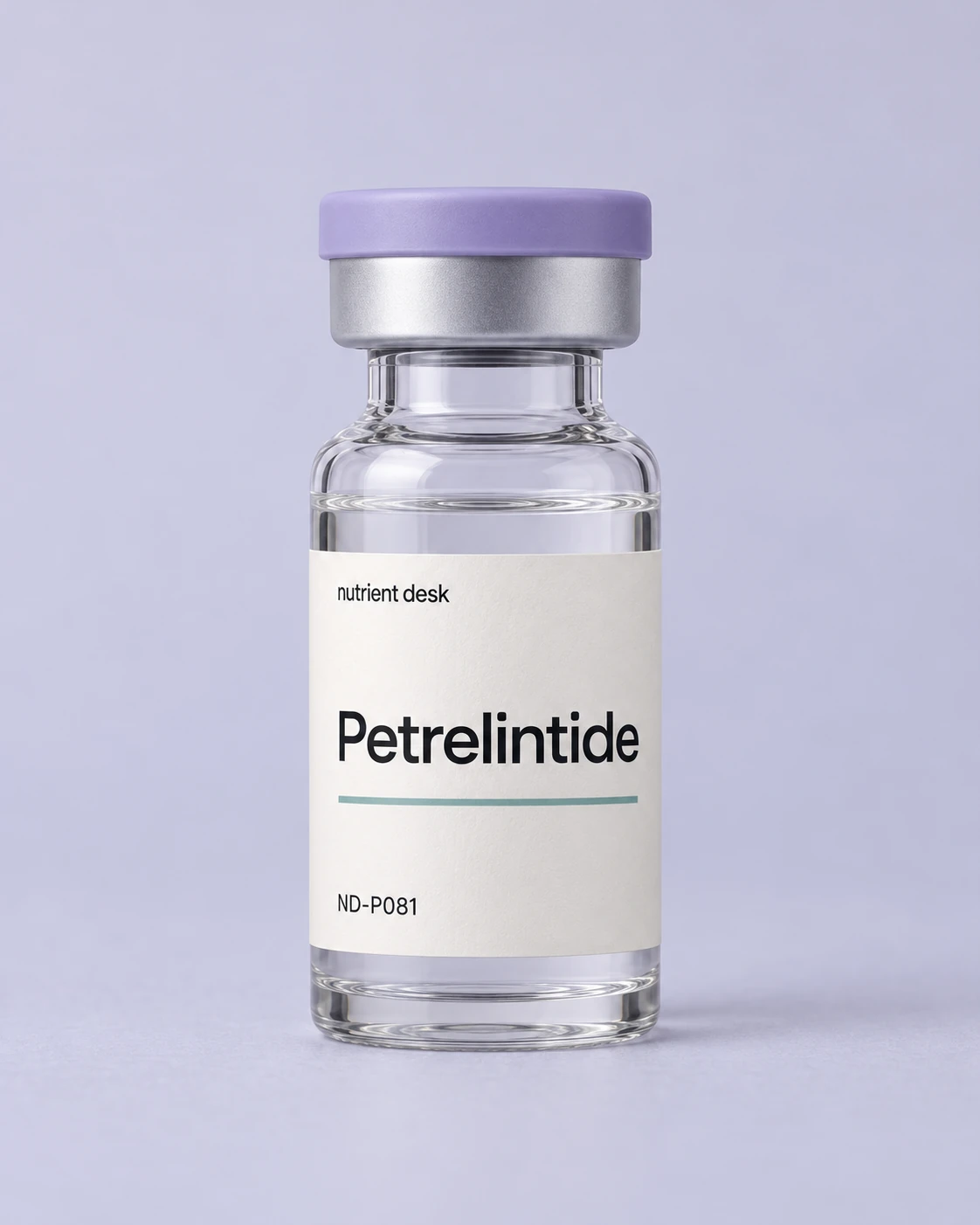
PetrelintideLong-acting amylin analogue
Petrelintide, also known as ZP8396, is designed to prolong amylin-related signalling. Its appeal is a different route to satiety, but the clinical value depends on both benefit and tolerability.
What is Petrelintide?
Petrelintide is an engineered, long-acting amylin analogue investigated for weight management.
How it works
Amylin participates in meal-response signalling, including fullness. Petrelintide is designed to extend this type of activity.
Effects studied
Weight management
Clinical development examines weight change, adverse effects and whether participants remain on treatment. 1
Evidence: Early signals do not establish long-term maintenance or superiority to other weight-management medicines.
What does the evidence show?
Early and developing clinical programme; retained reference not independently checked
Following the meal-satisfaction signal
Amylin is a hormone released by pancreatic beta cells with insulin. It participates in the body’s response to eating, including signals associated with fullness. Petrelintide is an engineered analogue intended to extend this activity and make it suitable for clinical development.
A distinct approach within a crowded field
Much discussion of weight treatment centres on GLP-1. An amylin-focused medicine approaches weight management through a different receptor system. Whether that difference means less nausea or more lasting weight change needs to be tested in people.
What the developing studies can show
Clinical research examines weight change, adverse effects and whether participants remain on treatment. Study size and duration determine how much confidence to place in the results. Shorter trials can identify a signal while leaving substantial uncertainty about long-term maintenance and less common harms.
The comparisons still matter
A placebo-controlled trial cannot establish superiority to semaglutide, tirzepatide or another active treatment. Results from a combination programme also cannot answer every question about petrelintide alone. Its proposed advantages need to translate into sustained weight management, manageable side effects and treatment people can continue.
Safety & status
Tolerability and treatment discontinuation need to be assessed alongside weight change. A different receptor target does not establish less nausea or fewer long-term risks.
Country and product status
Country-specific product availability and authorisation require a separate current check.
Frequently asked questions
Is petrelintide a GLP-1 agonist?
Its main development approach is amylin signalling, a different receptor system.
Has its mechanism proved it is better tolerated?
No. A tolerability advantage must be demonstrated in comparative human studies, not inferred from the mechanism.
Further reading
Sources
This entry was rewritten from our research archive. References below are reading leads unless a completed check is explicitly noted; a full independent evidence and regulatory review is still pending.
- Petrelintide · retained archive reference Archive research lead · Retained archive reference; not independently checked for this draft
Research provenance
This name was discovered in the Superpower peptide index, archived 26 October 2026. Its ratings and reviewer attribution have not been adopted as our own. The archive informed this original editorial draft; independent source review is still pending.