
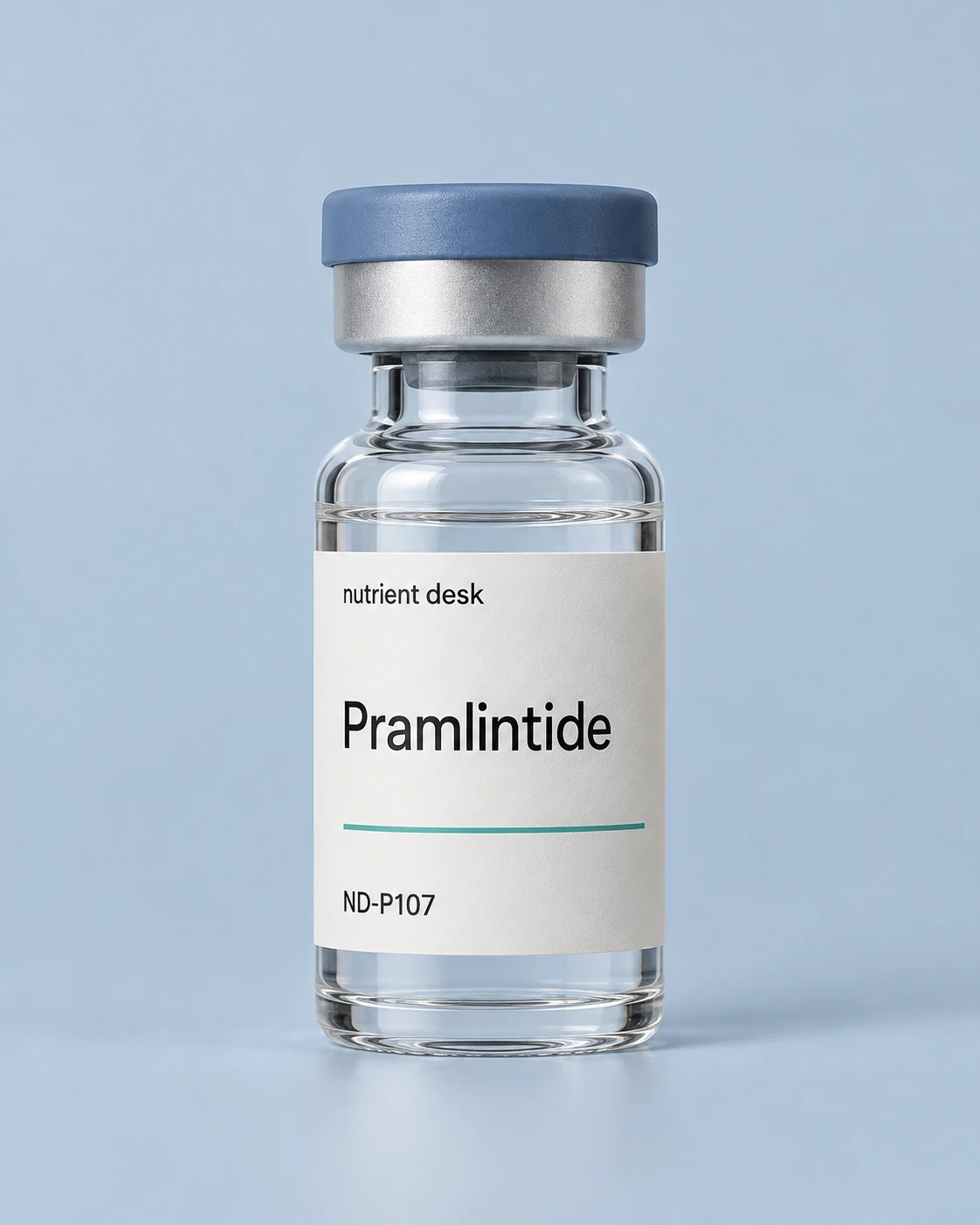
PramlintideAmylin analogue medicine
Pramlintide is an analogue of amylin, a hormone normally released with insulin. Its clinical use concerns selected people using mealtime insulin, with careful attention to hypoglycaemia.
What is Pramlintide?
Pramlintide is an amylin analogue used as an adjunct to mealtime insulin in selected people with diabetes. It complements parts of normal meal-related signalling but does not replace insulin. 1
How it works
Amylin is normally co-secreted with insulin. Pramlintide slows gastric emptying, reduces meal-related glucagon release and influences satiety. 1
Effects studied
Post-meal glucose control
Studied as an addition to an insulin regimen, with post-meal glucose and weight among the relevant outcomes. Results depend on the combined treatment rather than the peptide in isolation.
Evidence: Product-specific diabetes clinical evidence. 1
What does the evidence show?
Adjunct-to-insulin clinical use; archived US label retained
Insulin is not the only meal signal
Pancreatic beta cells normally release amylin alongside insulin. Amylin influences gastric emptying, meal-related glucagon secretion and satiety. Pramlintide reproduces aspects of these effects, which can alter the rise in blood glucose after eating.
Why an adjunct might be useful
For some people using mealtime insulin, adding another physiological pathway may help address post-meal glucose patterns. The benefit needs to be judged within the complete regimen. A change in glucose or body weight cannot be interpreted properly without knowing how insulin treatment and monitoring were managed.
The major safety issue is the combination
Using pramlintide with insulin can increase the risk of severe hypoglycaemia. This risk is central to its clinical use and cannot be set aside when discussing appetite effects. Managing the combination requires more than a simplified insulin-adjustment rule.
Tolerability affects everyday use
Nausea and changes in gastric emptying can make treatment difficult, while timing and monitoring add practical demands. Delayed stomach emptying can also affect other medicines and existing gastrointestinal conditions. Pramlintide has a specific role as an adjunct in diabetes care. It neither replaces insulin nor is broadly interchangeable with newer weight-management peptide treatments.
Safety & status
Severe hypoglycaemia with insulin is a central risk. Nausea and delayed gastric emptying also matter, including their effect on the timing and absorption of other medicines. 1
Country and product status
Country-specific product availability and authorisation require a separate current check.
Frequently asked questions
Can it replace mealtime insulin?
No. Its described role is adjunctive, with the combined regimen requiring careful management. 1
Why does slowing the stomach matter?
It changes when nutrients and some oral medicines become available, which affects both meal glucose and treatment timing. 1
Further reading
Sources
This entry was rewritten from our research archive. References below are reading leads unless a completed check is explicitly noted; a full independent evidence and regulatory review is still pending.
- Pramlintide · retained archive reference Archive research lead · Retained archive reference; not independently checked for this draft
Research provenance
This name was discovered in the Superpower peptide index, archived 26 October 2026. Its ratings and reviewer attribution have not been adopted as our own. The archive informed this original editorial draft; independent source review is still pending.