
PT-141Alias and product context
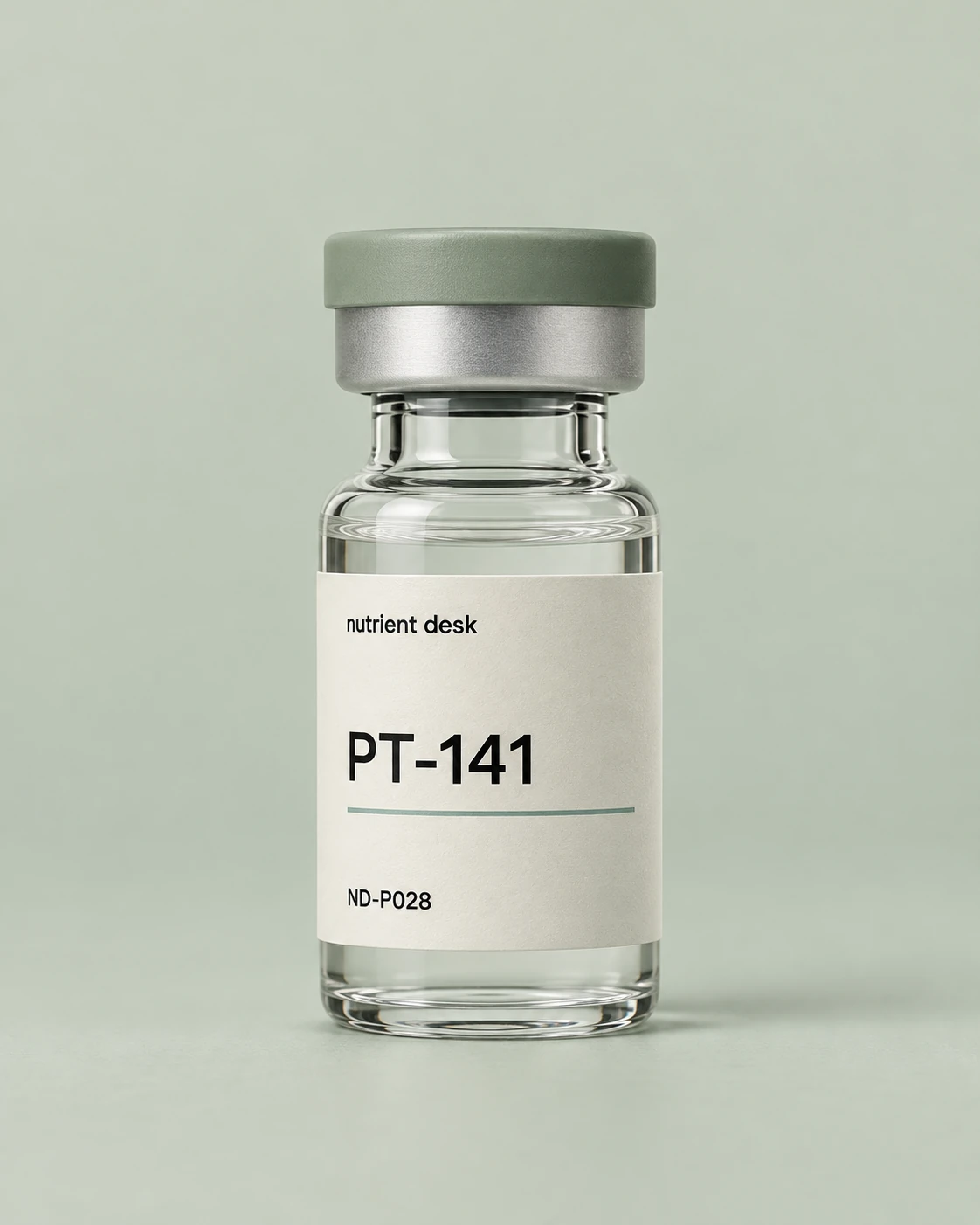
PT-141 is a research name for bremelanotide. The name identifies a molecule; it does not make an online product equivalent to a specified prescription preparation.
Before comparing this entry. Check the relationship to bremelanotide before treating these as separate substances.
What is PT-141?
PT-141 is a research name for bremelanotide, a synthetic melanocortin-receptor agonist. This entry explains the name used in research and online product listings.
How it works
It acts through melanocortin signalling in the central nervous system. This differs from primarily increasing genital blood flow.
Effects studied
Sexual desire and distress
The main bremelanotide programme studied acquired, generalised hypoactive sexual desire disorder in selected premenopausal women. It does not establish a universal sexual-performance benefit. 1
Evidence: Defined bremelanotide clinical programme
What does the evidence show?
Bremelanotide has a defined clinical development programme. Broader claims about online PT-141 products require evidence for their formulation, population and intended use.
One molecule, several presentations
The peptide acts on melanocortin receptors associated with central signalling. That is a different approach from medicines that primarily change genital blood flow. Neither mechanism means every cause of low desire or sexual difficulty has been addressed.
Where the strongest clinical context sits
The main bremelanotide programme concerned acquired, generalised hypoactive sexual desire disorder in a selected premenopausal population. Questionnaires measured desire and related distress. These results cannot automatically be extended to every sex, age group or reason for reduced desire. The bremelanotide profile explains that distinction in more detail. 1
Why formulation is not a technical footnote
An autoinjector, an unverified vial and a nasal spray can differ in delivered amount, stability and contaminants. Clinical results belong to a defined intervention, not just a sequence of amino acids. The word “research” on a label is not a quality certification or an instruction for human use.
Benefit and burden belong together
Nausea, flushing, blood-pressure effects and pigmentation changes are relevant to bremelanotide, regardless of broader claims made by a seller. Identifying PT-141 as bremelanotide does not establish the regulatory status or safety of any product currently sold under that name.
Safety & status
Nausea, flushing, blood-pressure effects and pigmentation changes are relevant. Concentration, impurities and delivery can differ between prescription formulations, sprays and online vials.
Country and product status
This introduction describes the molecule and its research context. Product availability, approved indications and eligibility in Germany and Switzerland require a current local product check; they are not established by an overseas study or an online listing.
Frequently asked questions
Is PT-141 a different drug from bremelanotide?
No. It is another name for the molecule; it does not identify an equivalent finished product.
Can trial results validate any PT-141 spray?
No. The trial intervention’s route, delivered amount and quality must match before evidence can be transferred.
Further reading
Sources
This entry was rewritten from our research archive. References below are reading leads unless a completed check is explicitly noted; a full independent evidence and regulatory review is still pending.
- PT-141: paper 10.1007/s40265-019-01187-w Research reference · Retained archive reference; not independently checked for this draft.
- PT-141: paper 10.1080/00224499.2023.2175192 Research reference · Retained archive reference; not independently checked for this draft.
- PT-141: dailymed.nlm.nih.gov reference Reference or product information · Retained archive reference; not independently checked for this draft.
- PT-141: dailymed.nlm.nih.gov reference Reference or product information · Retained archive reference; not independently checked for this draft.
Related names & questions
Connections help distinguish compounds and uses; they do not imply equivalent benefits.
Research provenance
This name was discovered in the Superpower peptide index, archived 26 October 2026. Its ratings and reviewer attribution have not been adopted as our own. The archive informed this original editorial draft; independent source review is still pending.