
Berberine: what do the studies show?
Clinical review pending
Berberine is sold for blood sugar, cholesterol and weight management. Trials have found modest improvements in some blood measurements; the weight-loss claims are harder to support. What does that mean when choosing a supplement?
Berberine is sold for blood sugar, cholesterol and weight management. Trials have found modest improvements in some blood measurements; the weight-loss claims are harder to support. What does that mean when choosing a supplement?
From plant to supplement
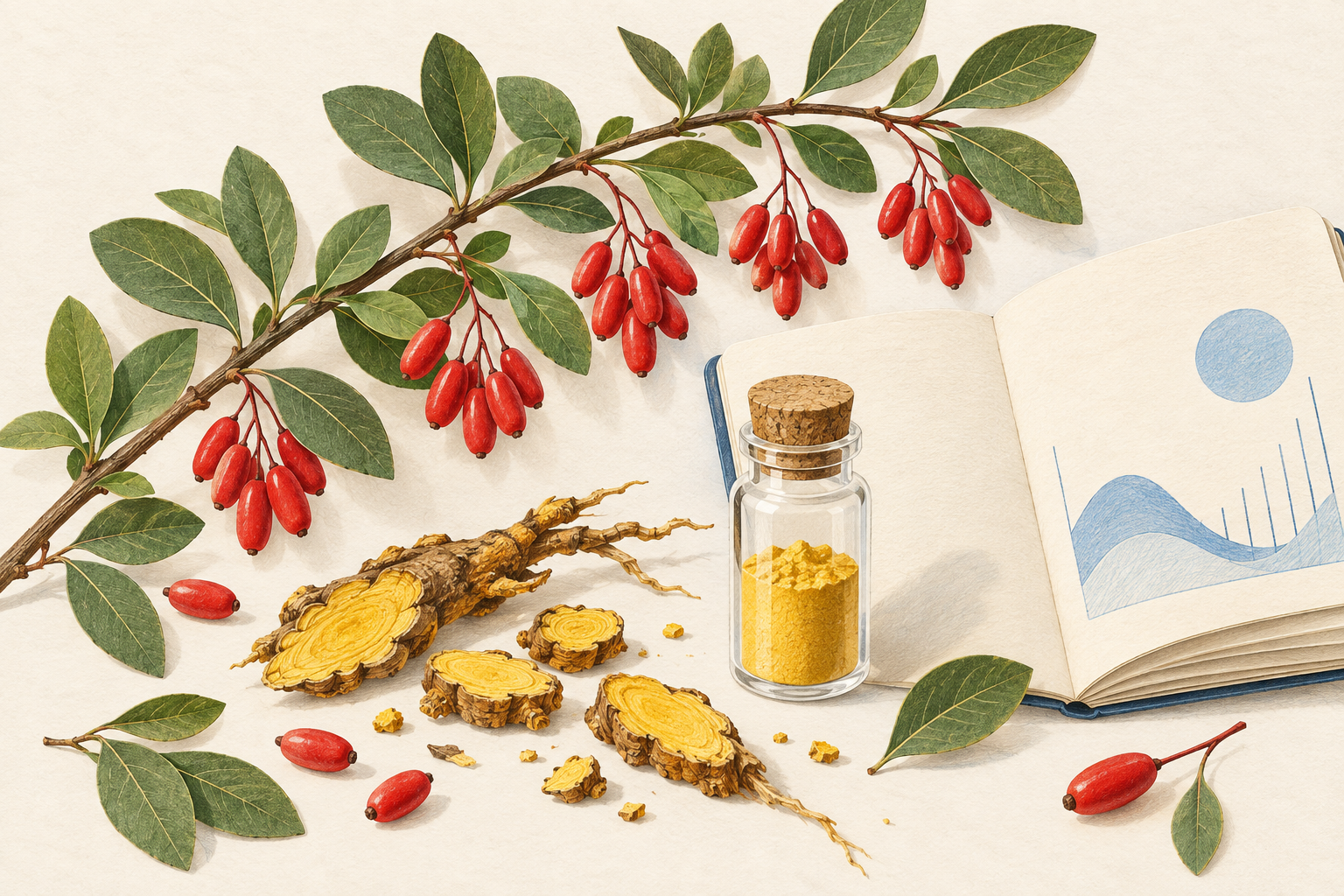
Barberry is one of the plants that contains berberine. Editorial illustration. nccih
What is berberine?
Berberine is a compound found in barberry, goldenseal and several other plants used in traditional medicine. You will now find it sold as a supplement for blood sugar, cholesterol and weight management.
Those uses have different amounts of evidence behind them. Glucose and cholesterol have shown modest improvements in clinical trials. Weight loss is harder to pin down: the US National Center for Complementary and Integrative Health describes the evidence as inconclusive.
Blood sugar: a modest improvement
A 2023 review brought together 20 placebo-controlled trials involving 1,761 people. Berberine improved glucose-related measurements, with larger effects among participants with diabetes. In the studies that measured fasting glucose, the average reduction compared with placebo was about 0.52 mmol/L.
The result is encouraging for further research in diabetes. For someone whose blood sugar is already normal, the benefit is less clear. These trials also do not establish that berberine can replace prescribed diabetes medication.
What happens to cholesterol?
In a separate review of 18 placebo-controlled trials, LDL cholesterol fell by an average of about 0.46 mmol/L compared with placebo. LDL is often called “bad” cholesterol. Triglycerides, another type of fat measured in blood tests, also decreased modestly.
The studies lasted four to 24 weeks. That is enough time to see a change in a blood test, but it leaves a question many people would care more about: does taking berberine prevent heart attacks? The review could not answer that. Its authors called for larger trials measuring clinical outcomes.
Two changes researchers measured
- Fasting blood glucose: −0.52 mmol/L — Glucose review: 20 trials overall; the estimate uses the trials measuring fasting glucose.
- LDL cholesterol: −0.46 mmol/L — Lipid review: 18 trials overall; the estimate uses the trials measuring LDL.
Average differences versus placebo in separate 2023 reviews. These are blood measurements, not estimates of weight loss or heart-attack risk. glucose lipids
Does it help with belly fat?
In a 2026 trial, researchers followed 337 adults with obesity and metabolic fatty liver disease, all without diabetes, for six months. Participants received either berberine or a placebo. The team measured fat around the internal organs and in the liver.
Neither measure fell significantly more with berberine than with placebo. Some blood markers improved in exploratory analyses, although those findings need more caution than the main results.
The result applies to the people and conditions studied; it cannot settle every question about weight loss. A lower cholesterol reading alone does not show that someone is losing body fat.
Inside the six-month trial
- Random assignment: 337 adults — Participants were assigned to one of two groups.
- 6 months: Berberine or placebo — Researchers compared the two groups after treatment.
- Visceral & liver fat: No significant difference — The main fat measurements did not favour berberine.
Adults with obesity and metabolic fatty liver disease, without diabetes. Neither visceral fat nor liver fat decreased significantly more with berberine than with placebo. adiposity
What about gut health?
Berberine also interests researchers who study gut bacteria. The PREMOTE trial followed 409 people newly diagnosed with type 2 diabetes. During treatment, changes in gut bacteria and bile-acid metabolism accompanied better blood-sugar control. This gives researchers a possible explanation for some of berberine’s effects.
Participants received an antibiotic before treatment began, and all had diabetes. Those conditions make the findings difficult to apply to someone simply hoping to feel less bloated. The trial did not establish that berberine improves digestion generally or “resets” the gut.
Will any berberine supplement do?
Formulation matters when comparing a bottle with a study. A 2025 review of metabolic-syndrome trials included purified berberine and excluded plant extracts and phospholipid complexes. Its findings therefore apply most directly to the preparations it studied.
Look for the ingredient and formulation used in the research, then check who took it and for how long. Blends introduce another complication: if several ingredients were tested together, you cannot assume berberine caused the result. Better absorption, by itself, also does not demonstrate a better health outcome.
Side effects and medication interactions
Berberine can cause nausea, constipation, diarrhoea and abdominal discomfort. It should not be given to infants. People who are pregnant or breastfeeding should avoid it.
It can also interact with medicines. In a small human study, repeated use reduced the activity of several enzymes that process drugs. This can change how another medicine behaves in the body. If you take regular medication, ask a pharmacist or clinician to check the combination and bring the supplement label, including any added ingredients.
Effects studied
Blood-sugar control
Supported, with limits
Modest improvements in trials, especially in people with diabetes. Not evidence for replacing prescribed treatment. glucose
LDL cholesterol & triglycerides
Supported, with limits
Small average reductions over weeks to months; prevention of heart attacks is not established by these trials. lipids
Weight loss
Uncertain
The overall evidence remains inconclusive; results cannot support a reliable weight-loss promise. nccih
Visceral & liver fat
No benefit in a recent trial
A six-month trial found no significant reduction in adults with obesity and fatty liver disease without diabetes. adiposity
A healthier gut / less bloating
Not established by this evidence
Microbiome findings in diabetes do not demonstrate general digestive relief. premote
Plant sources
Berberine occurs in several medicinal plants. In barberry, it is found in the roots, rhizomes, stems and bark. A whole plant extract can contain other compounds, so its effects cannot be assumed to match purified berberine.
European barberry
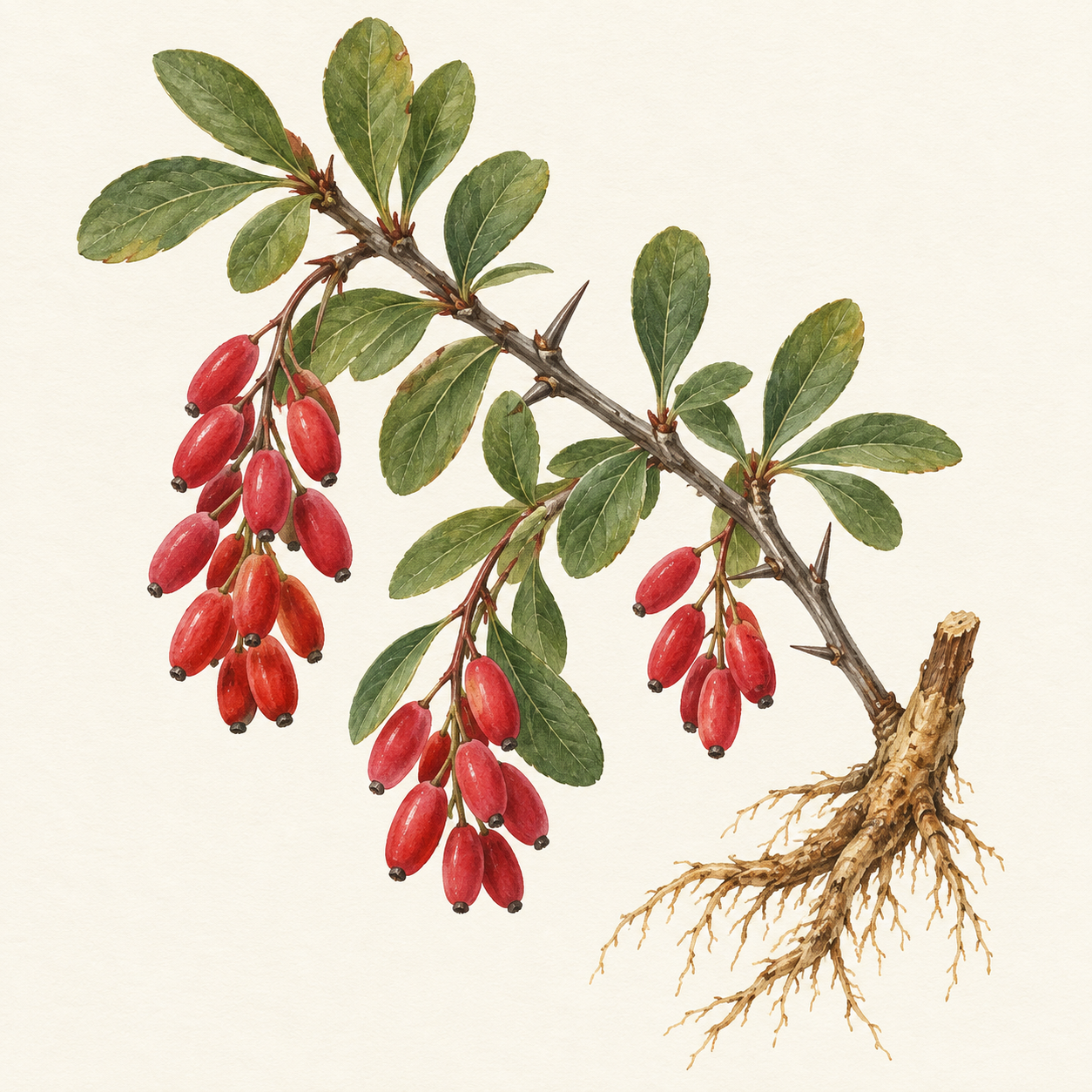
Berberine is present in the roots, rhizomes, stems and bark. barberry-review
Goldenseal
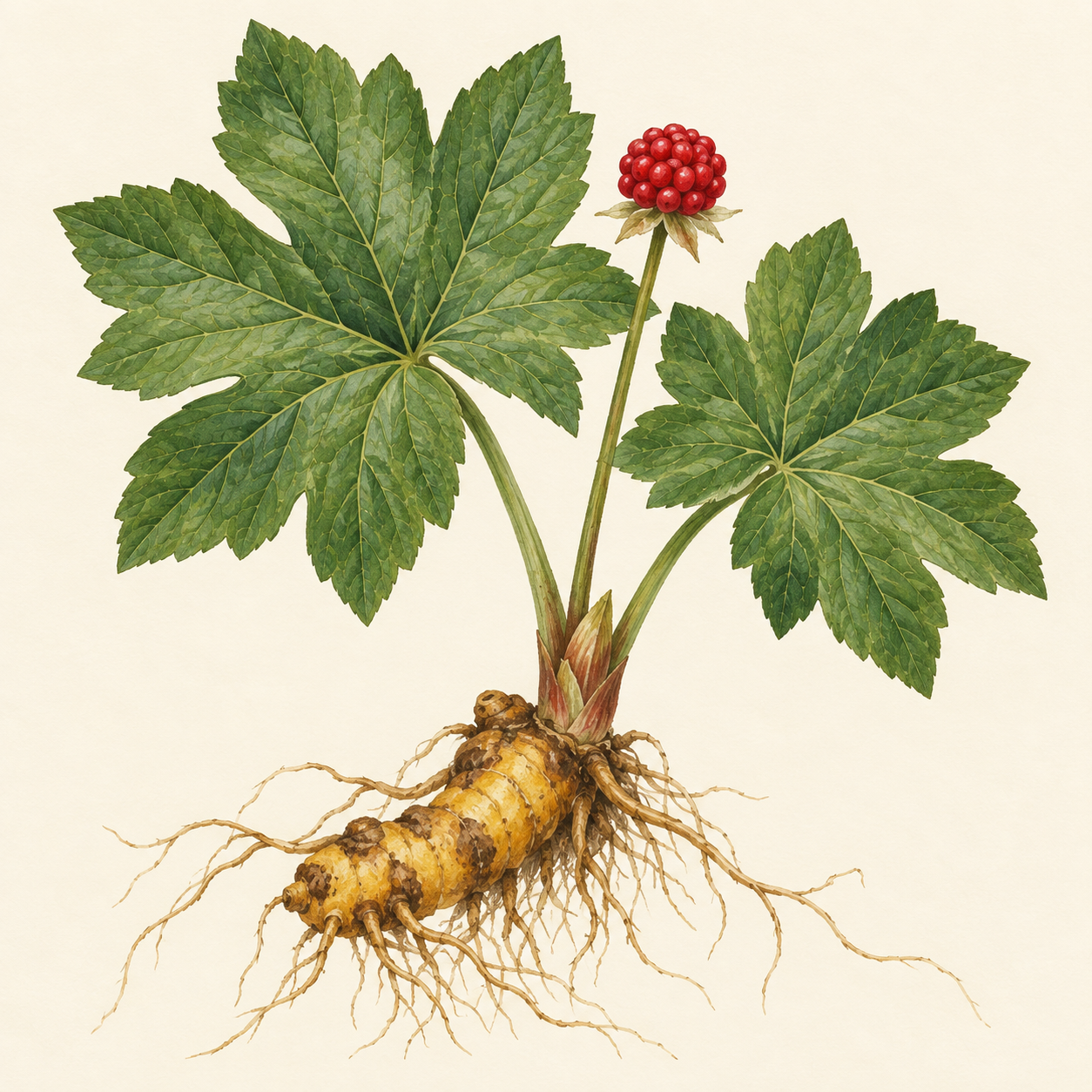
Contains berberine, but research on isolated berberine may not apply to goldenseal extracts. goldenseal
Goldthread
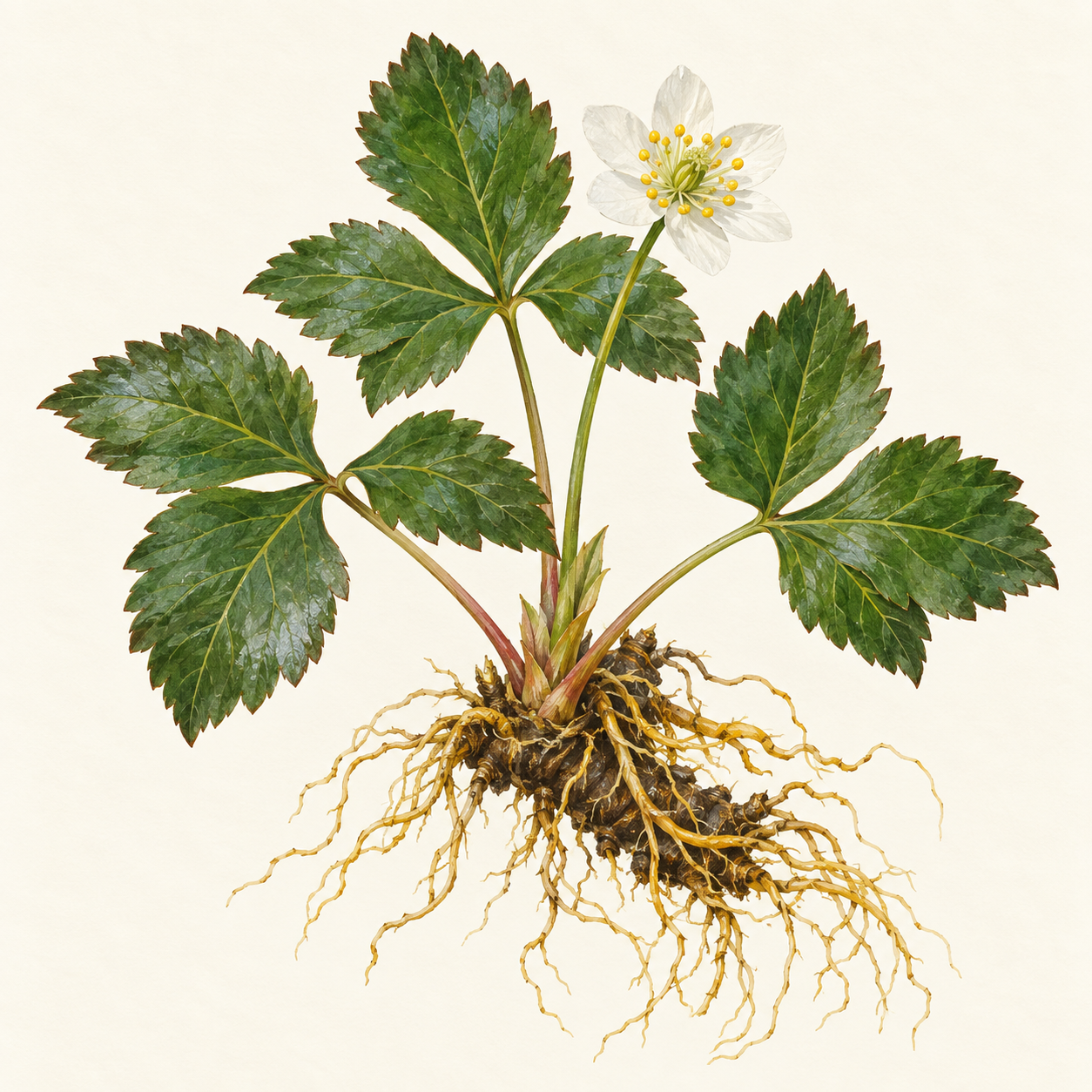
Another berberine-containing plant listed by NCCIH. plant-sources
Oregon grape
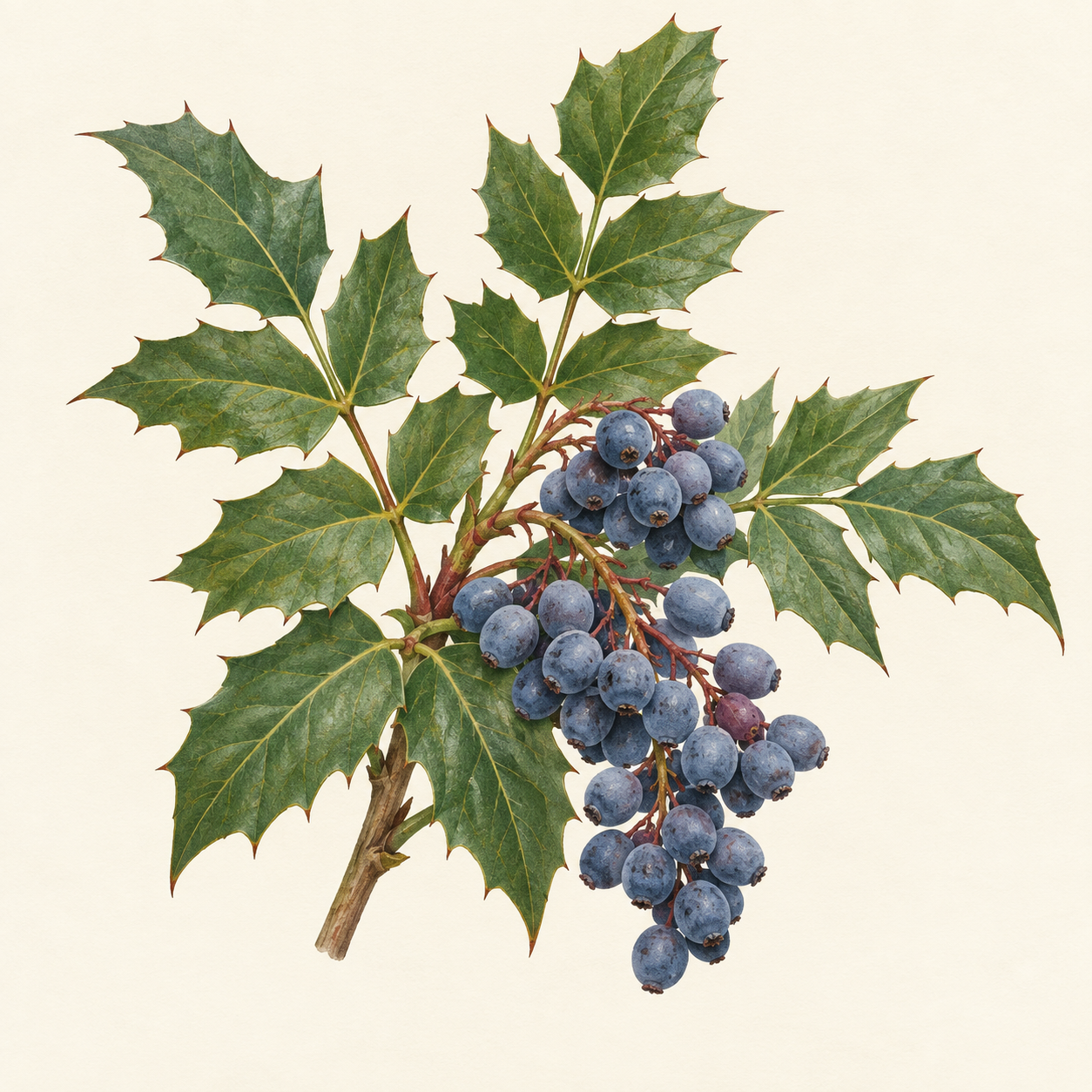
Also contains berberine; a plant source is not a standardized supplement dose. plant-sources
This is a list of botanical sources, not a food or dosing guide. It does not establish equivalent amounts between berries, plant extracts and capsules.
Sources
NCCIH · Berberine and Weight Loss: What You Need To Know
Zhao et al. · Glucose and insulin traits: meta-analysis of 20 trials (2023)
Blais et al. · Blood lipids: meta-analysis of 18 trials (2023)
Lei et al. · Berberine and adiposity: randomized trial (2026)
PREMOTE · Gut microbiome-related effects in type 2 diabetes (2020)
Liu et al. · Metabolic syndrome: placebo-controlled trial review (2025)
Guo et al. · Drug-metabolizing enzymes: human interaction study (2012)
NCCIH · In the News: Berberine
NCCIH · Goldenseal: Usefulness and Safety
Berberine and barberry (Berberis vulgaris): a clinical review (2019)