
Travel Support
A guide to supplement claims for travelers’ diarrhea and jet lag, with practical context on prevention, hydration, and safety.
What problem are you trying to prevent?
Travelers’ diarrhea is usually an intestinal infection. Jet lag is a temporary mismatch between the body clock and local time after rapid travel across time zones. These are different problems, so evidence for one does not establish protection against the other. 1 2
What matters before a supplement?
Food and water precautions reduce exposure opportunities but cannot eliminate diarrhea risk. For jet lag, CDC discusses shifting sleep before departure and planning light exposure around the destination and direction of travel. 1 2
What if diarrhea starts?
Replacing lost fluid and electrolytes is central to treatment. CDC favors oral rehydration solution for substantial fluid loss, prepared with the packet’s specified amount of safe water. Bloody diarrhea or diarrhea with fever needs a different treatment approach; loperamide alone is not recommended in these circumstances. 1
Nutrients with the strongest ratings
Sorted by the largest rated effect. Bars show effect size, the letter is the evidence grade.
Can probiotics prevent travelers’ diarrhea?
Current CDC guidance finds the evidence insufficient to recommend probiotics for prevention. Positive findings for one preparation should not be generalized to every product or strain. 1
 Saccharomyces boulardiiMixed
A 1993 placebo-controlled Austrian study involving 3,000 travelers tested 250 mg and 1,000 mg preparations and reported less diarrhea. Results varied with adherence, dose, and destination. This older positive trial does not resolve the uncertainty identified in current guidance. 1 3
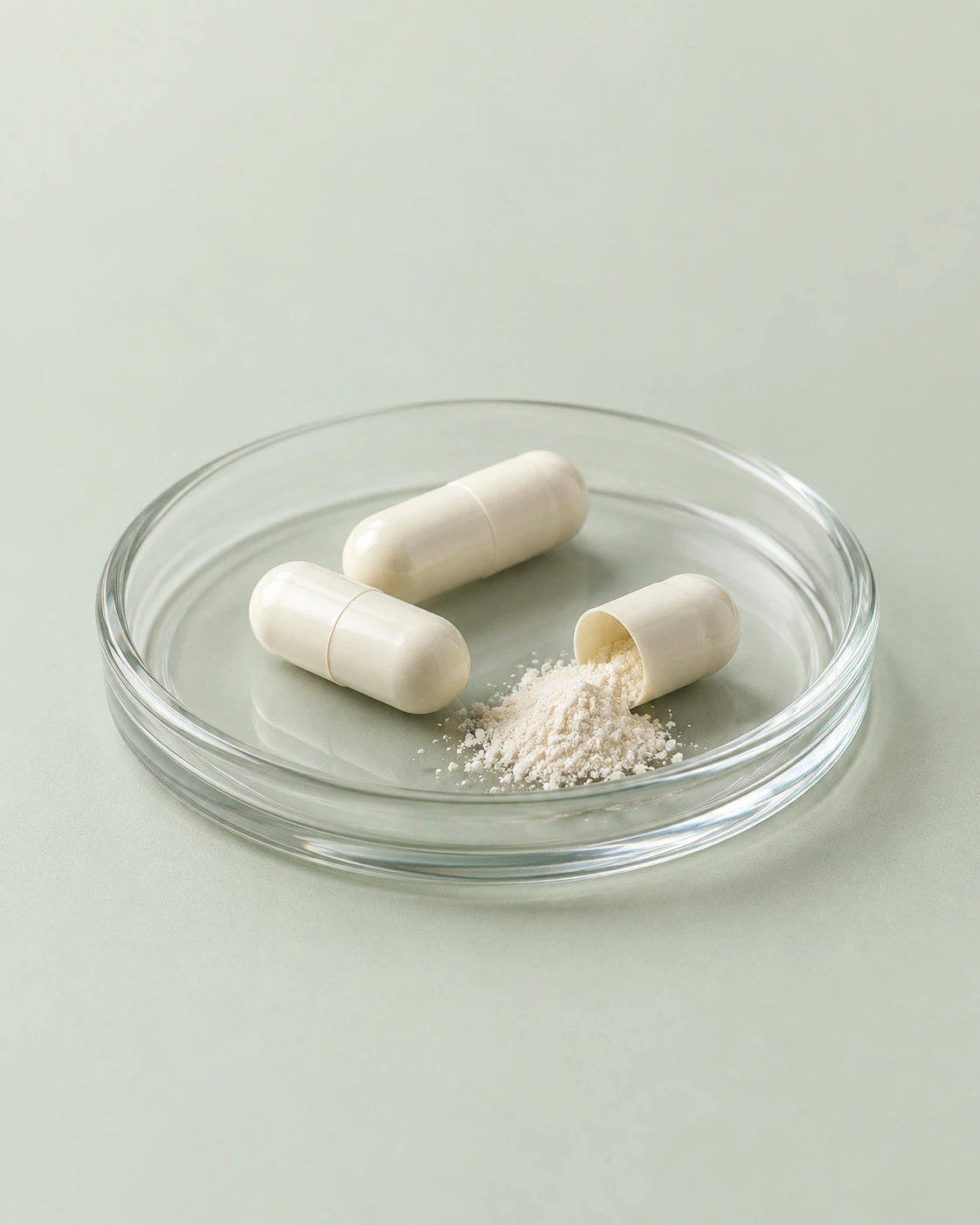 Lactobacillus rhamnosus GGToo little evidence
CDC includes Lactobacillus GG among the probiotics studied, but describes the overall results as inconclusive and notes problems with reliably standardized preparations. A species name on a label is not evidence that a particular product prevents illness. 1
Does melatonin help with jet lag?
NCCIH reports evidence of reduced overall symptoms after eastward flights, while the sleep-quality evidence is less certain. CDC notes that 0.5–1 mg is often enough to shift the body clock, but timing depends on the itinerary and internal body time. Mistimed melatonin can worsen the mismatch; this is not a universal bedtime schedule. 2 4
Who needs extra caution?
Probiotics have occasionally been linked to serious bloodstream infections, mainly in severely ill or immunocompromised people. They should not be assumed harmless in those groups. 5
What are the melatonin trade-offs?
BfR warns against unsupervised use in children, pregnancy, breastfeeding, epilepsy, autoimmune disease, and impaired liver or kidney function. Drowsiness and reduced alertness matter when driving. People using medicines, particularly anticoagulants or certain blood-pressure medicines, need an interaction review. 6
Questions people ask
Do probiotics reliably prevent diarrhea abroad?
No. CDC currently considers the evidence insufficient for routine preventive use. 1
Does a positive yeast trial apply to all probiotics?
No. The Austrian trial tested specific Saccharomyces boulardii preparations; current guidance still finds the overall prevention evidence inconclusive. 1 3
Are sports drinks the same as oral rehydration solution?
CDC allows preferred fluids for mild cases but favors oral rehydration solution for severe fluid loss. Very sugary drinks can worsen diarrhea when consumed in quantity. 1
Is a higher melatonin dose better?
Not necessarily. CDC says 0.5–1 mg often shifts the body clock and advises against doses above 5 mg because melatonin may remain elevated at the wrong time. 2
Can melatonin be mistimed?
Yes. Taking it at the wrong internal body time can increase circadian misalignment. 2
Sources
- Travelers’ Diarrhea CDC Yellow Book, 2026
- Jet Lag Disorder CDC Yellow Book, 2025
- Dietary Supplements for Weight Loss: Health Professional Fact Sheet NIH Office of Dietary Supplements