
Testosterone Balance
What does “testosterone balance” mean for someone who feels tired or has lost interest in sex? This guide separates diagnosis, hormone measurements and supplement claims.
The useful question is whether testosterone is actually low
Testosterone contributes to sexual function, sperm production, muscle and bone. It is present in people of all sexes. This page focuses on supplement research in adult men; it does not cover hormone care for women or gender-affirming treatment. 1
Symptoms provide context, not a diagnosis
Reduced sexual desire, erectile difficulties, reduced energy and changes in muscle can occur with low testosterone. Diagnosis requires compatible symptoms together with consistently low blood results. Feeling tired alone is not enough to establish testosterone deficiency. 2 3
Why a second morning blood test matters
The Endocrine Society recommends confirming a low result with another morning fasting measurement, using an accurate test and appropriate reference ranges. Once deficiency is confirmed, assessment should investigate the cause. The guideline does not recommend routine screening of the general male population. 3
A low value can have more than one explanation
Illness, poor nutrition, excessive exercise and some medicines can temporarily lower testosterone. Other possibilities include conditions affecting the testes or pituitary gland, obesity and sleep disorders. Some causes, including obesity in some men, may be reversible; that is why finding the reason matters before choosing a treatment. 2
Nutrients with the strongest ratings
Sorted by the largest rated effect. Bars show effect size, the letter is the evidence grade.
A higher number is only one possible outcome
A systematic review covering 52 studies and 27 proposed testosterone boosters found that most did not increase total testosterone. Even when a study reports a hormonal change, the clinical question remains whether it improves symptoms that matter to the person. Diagnostic guidance requires symptoms and repeated low measurements together, not a target of raising every man’s value. 3 4
Fenugreek: a small signal with very low certainty
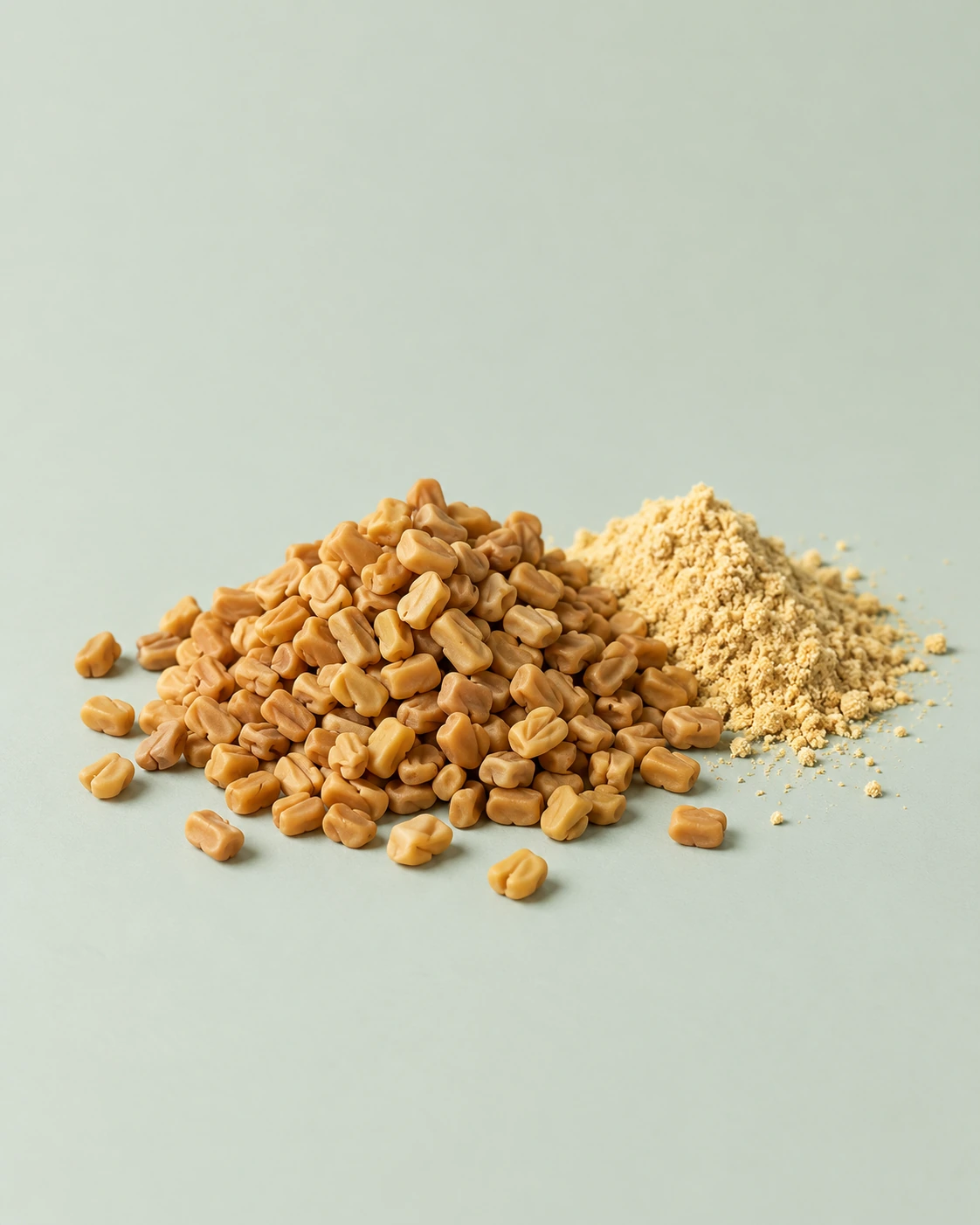
A 2026 meta-analysis found a small average increase in total testosterone across six trials, but no clear pooled increase in free testosterone across five. The authors rated certainty very low for both outcomes; none of the included studies had a low overall risk of bias. This leaves a possible effect to investigate, rather than a dependable way to correct deficiency. 5
What the newer trial actually compared
In a 12-week trial, 95 men aged 40–80 completed treatment with placebo or 600, 1,200 or 1,800 mg of fenugreek extract daily in tablets that also contained essential nutrients. Plasma total testosterone increased from baseline, but the pooled extract groups did not differ significantly from placebo on that measure. Salivary testosterone did differ; subjective effects were not reported as improved. The distinction between starting values and placebo changes the interpretation. 6
Tribulus: sexual-function claims are not testosterone evidence
A 2025 systematic review included ten studies with 483 men. Eight found no significant androgen changes; two lower-quality studies in men with low testosterone found increases from baseline. The participants in the neutral studies did not have low androgen levels initially, so the findings leave a subgroup question open. Evidence for a reliable testosterone increase remains weak; erectile-function results answer a separate question. 7
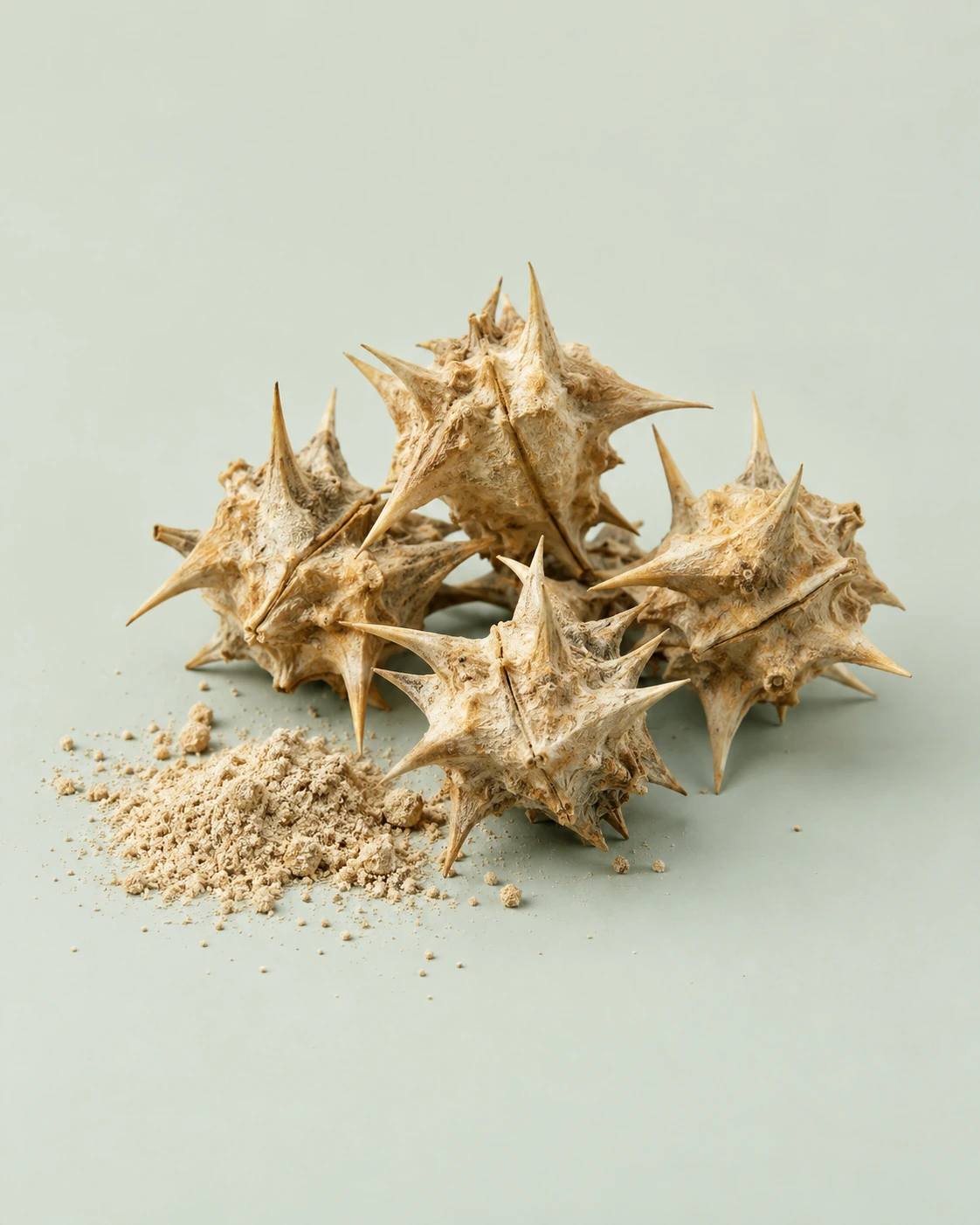 Tribulus terrestrisToo little evidence
The available review does not establish a reliable testosterone increase. 7
D-aspartic acid did not help trained men in a longer trial
A randomized trial assigned 22 resistance-trained men aged 18–36 to 6 g daily or placebo during 12 weeks of supervised training. Nineteen completed the study. Total and free testosterone did not improve, and strength or muscle growth did not exceed the placebo group’s gains. This finding applies to the studied trained men, not to treatment of diagnosed hormone deficiency. 8
Supplements and prescribed testosterone need different conversations
The Endocrine Society recommends testosterone therapy for appropriately diagnosed hypogonadism, after discussing benefits, risks and monitoring. It recommends against starting testosterone in men planning fertility in the near term. A desire for children therefore belongs in the treatment discussion from the beginning. Supplement studies do not replace this assessment. 3
What this review leaves out
This page evaluates fenugreek, tribulus and D-aspartic acid. It does not assess DHEA, fadogia, evening primrose, pumpkin seed, saw palmetto or mucuna products.
Questions people ask
Does fatigue mean low testosterone?
Fatigue can accompany low testosterone, but diagnosis needs compatible symptoms and repeatedly low morning blood results. Fatigue by itself is not diagnostic. 2 3
Is one low test enough?
No. The Endocrine Society recommends repeating a morning fasting measurement to confirm a low result. 3
Does fenugreek raise testosterone?
A recent review found a small total-testosterone signal but no clear free-testosterone increase, with very low certainty for both. That does not establish a reliable treatment for deficiency. 5
Will D-aspartic acid improve gym results?
In the cited 12-week study of trained men, 6 g daily did not improve testosterone, strength or muscle growth beyond placebo. 8
What if I want children?
Fertility plans matter before hormone treatment: the Endocrine Society recommends against starting testosterone therapy when fertility is planned in the near term. 3
Sources
- Testosteron IQWiG
- Hypogonadism in Men Endocrine Society
- Testosterone Therapy for Hypogonadism Guideline Resources Endocrine Society, 2018