
Cherry Extract
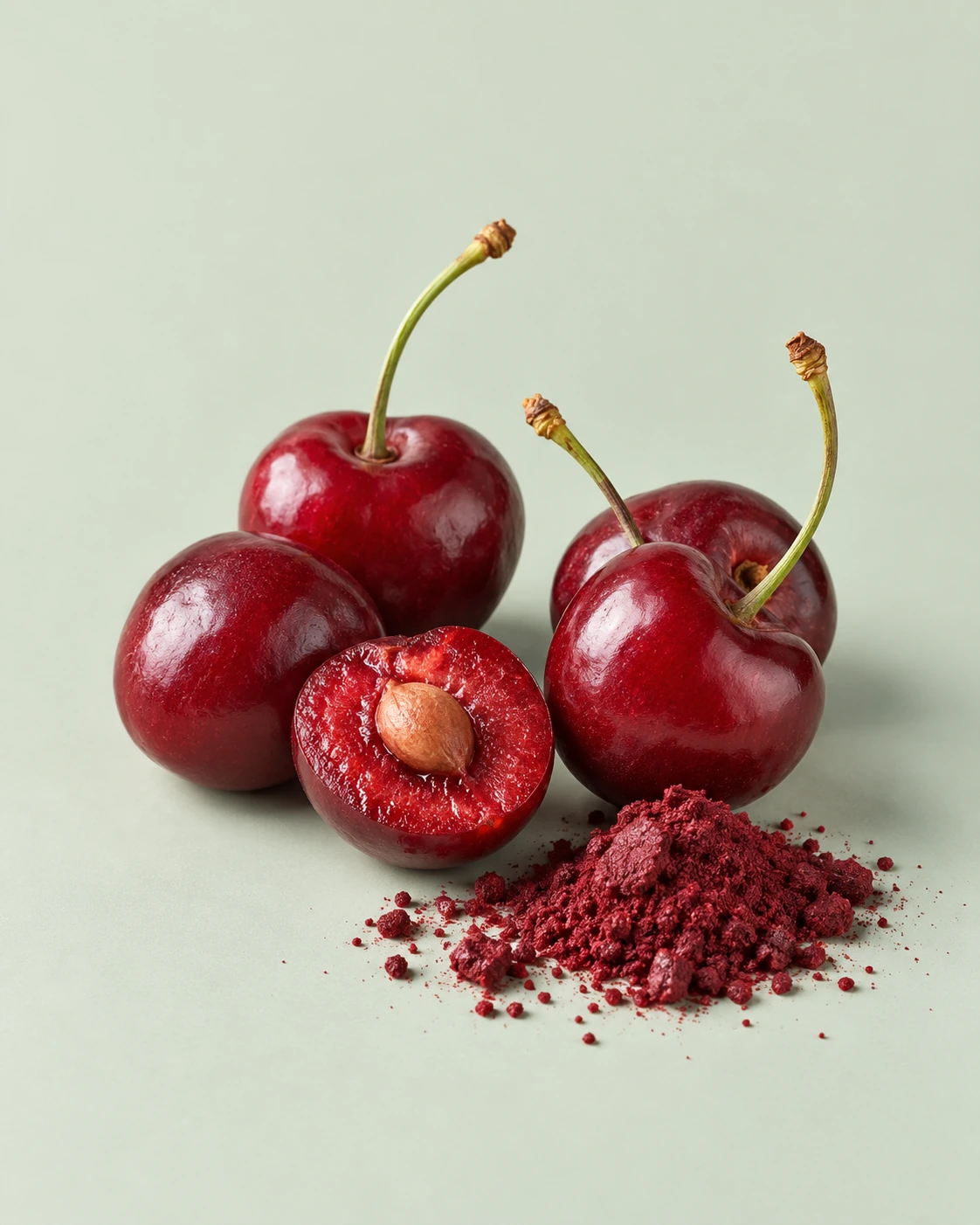
Cherry extract is a concentrate made from the fruit of cherry trees (Prunus species), which is rich in red anthocyanin pigments.
Also listed as Wild Cherry extract, Sweet Cherry extract, Black Cherry Extract, organic Wild Cherry extract
What it is studied for
The strongest rated effects first. Bars show the size of the effect, the letter grades the evidence, and each rating lists the studies behind it.
Which cherry products does this page cover?
The studies reviewed here concern tart or sour cherries, including juice and powders. Their findings do not establish the same effects for every product sold as cherry extract. 1 2
Why are cherries being studied?
Tart cherries contain melatonin and anthocyanins. These compounds offer a rationale for studying sleep and recovery, but their presence alone does not establish a useful clinical effect. 2 3
Key studies
The most recent publications linked to Cherry Extract's ratings.
Why people take it
SuppCo community snapshot, 2026-09-28. Reasons for use are not evidence that it works.
Questions people ask
Do these findings apply to any cherry extract?
No. The recovery evidence concerns tart-cherry preparations; product identity matters. 2
Does tart cherry remove all muscle-damage signals?
No. The meta-analysis found no significant change in creatine kinase despite improvements in some recovery outcomes. 2
Is cherry juice a proven insomnia treatment?
The sleep review found promising results in some studies, but the evidence was limited and heterogeneous. 3
Were long-term safety studies available?
The athletic safety evidence summarized by NIH was short term, up to two weeks. 1
Related nutrients
 Tart Cherry
Sources
- Dietary Supplements for Exercise and Athletic Performance NIH Office of Dietary Supplements
- Tart Cherry Supplementation and Recovery From Strenuous Exercise: A Systematic Review and Meta-Analysis International Journal of Sport Nutrition and Exercise Metabolism, 2021 · Study record
- The Effect of Tart Cherry on Sleep Quality and Sleep Disorders: A Systematic Review Food Science & Nutrition, 2025