Cinnamon
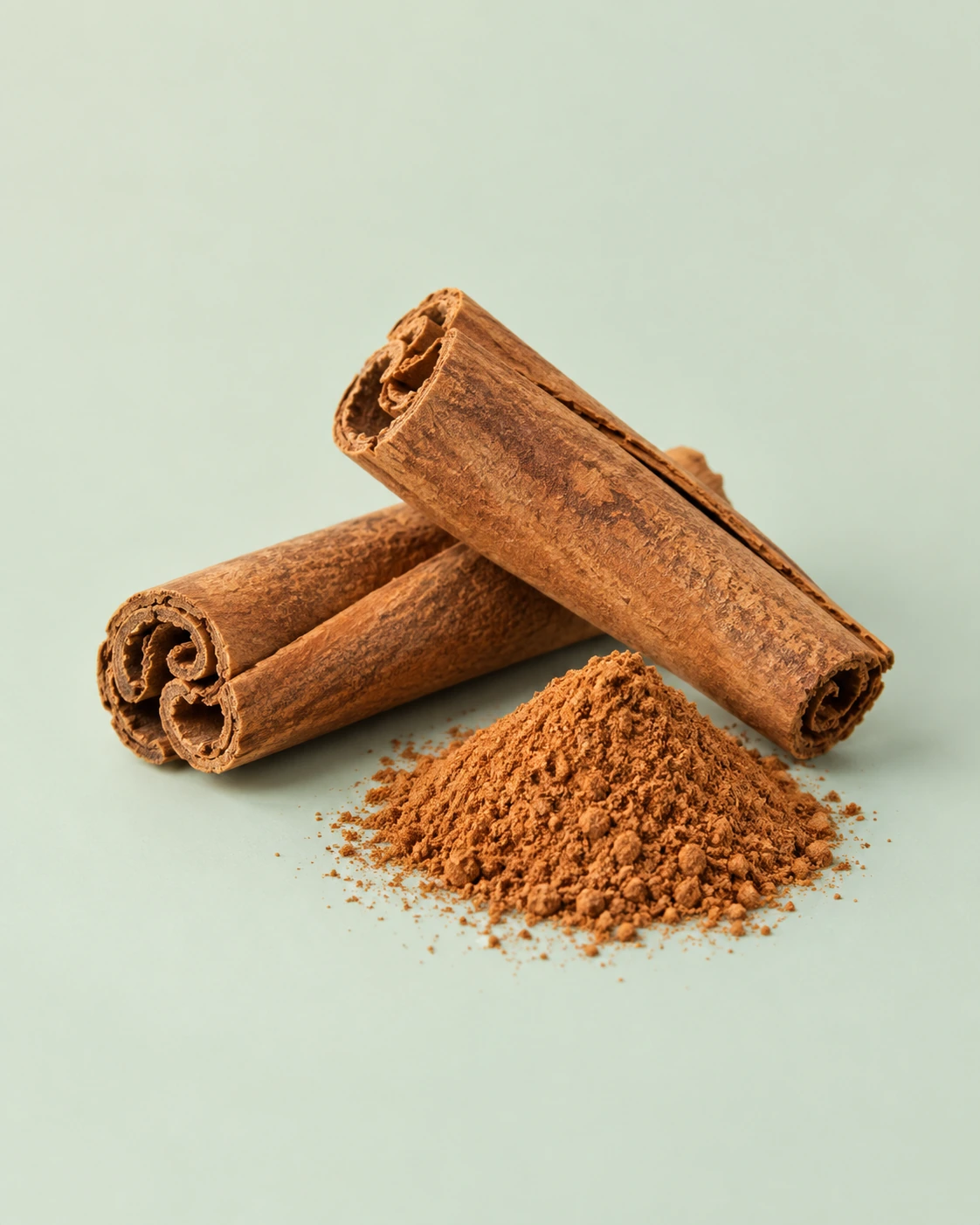
Cinnamon is a spice made from the inner bark of Cinnamomum trees. The two main types are Ceylon cinnamon and cassia.
Also listed as Chinese (Saigon) cinnamon, Cassia Cinnamon, Indonesian (Ceylon/True) Cinnamon, Ceylon Cinnamon
What it is studied for
The strongest rated effects first. Bars show the size of the effect, the letter grades the evidence, and each rating lists the studies behind it.
Which cinnamon is in the jar?
Cinnamon products can come from different species and plant parts. Their chemical makeup differs, and labels do not always identify the species. Cassia generally contains more coumarin than Ceylon cinnamon, an important distinction for frequent use. 1 2
Why people take it
SuppCo community snapshot, 2026-09-28. Reasons for use are not evidence that it works.
Questions people ask
Is Ceylon cinnamon proven more effective for blood sugar?
Its lower coumarin content is a safety distinction. NCCIH notes that differences between species and preparations make the clinical evidence difficult to interpret. 1 2
Does the BfR value mean everyone may eat 2 g daily?
No. That example assumes a 60 kg adult and average Cassia coumarin content. The safety benchmark applies to coumarin, and cinnamon concentrations vary. 3
Can I tell Cassia from Ceylon by looking at the powder?
Not reliably. The BfR recommends checking the species information when choosing Ceylon cinnamon. 2
Sources
- Cinnamon National Center for Complementary and Integrative Health
- FAQ on coumarin in cinnamon and other foods German Federal Institute for Risk Assessment
- Neue Erkenntnisse zu Cumarin in Zimt Bundesinstitut für Risikobewertung, 2012