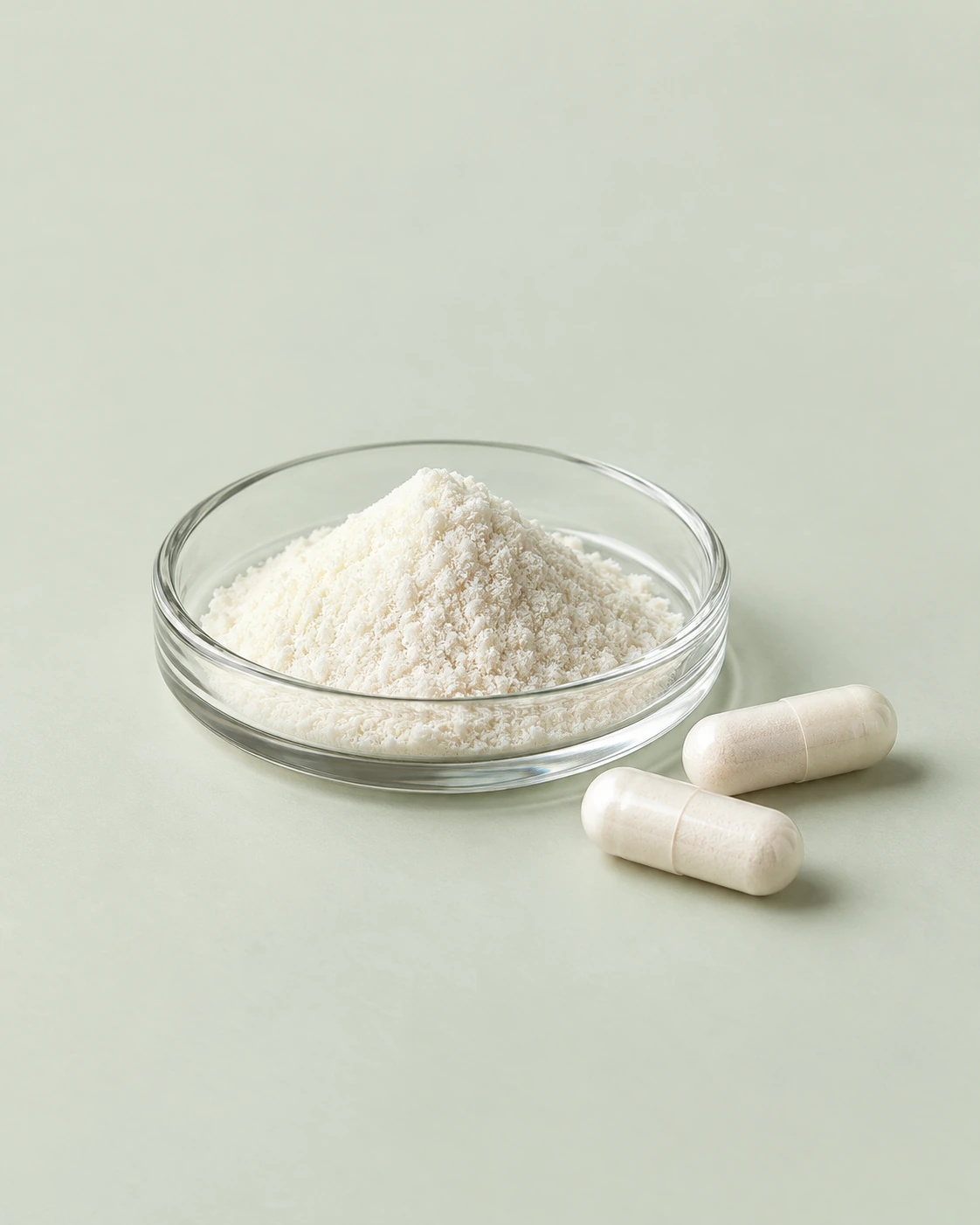
Hyaluronic Acid
Hyaluronic acid, also called hyaluronan, is a compound the body makes itself and is present in skin and joint fluid.
Also listed as Hyaluronan, Hyaluronate (as sodium or potassium salt)
What it is studied for
The strongest rated effects first. Bars show the size of the effect, the letter grades the evidence, and each rating lists the studies behind it.
Can a capsule help dry skin?
Oral hyaluronic acid has promising trial results for skin hydration. A seven-trial analysis found improvements in hydration, elasticity and wrinkle depth, but studies were small and varied. 1
What is hyaluronic acid?
Hyaluronan is another name for hyaluronic acid, a compound made by the body and present in skin and joint fluid. Its normal role in these tissues does not by itself establish what swallowing it achieves. 2
Key studies
The most recent publications linked to Hyaluronic Acid's ratings.
Why people take it
SuppCo community snapshot, 2026-09-28. Reasons for use are not evidence that it works.
Questions people ask
How quickly were effects measured?
In the 2021 trial, several differences emerged after 8–12 weeks, not immediately. 3
Does it work like an injection?
The oral studies do not establish equivalence to joint injections; these are different interventions. 2
Is more necessarily better?
The newer trial compared only 60 and 120 mg daily with placebo; it does not establish benefits from progressively higher doses. 4
Does it improve every sign of skin aging?
No. The meta-analysis found positive results for some measures and no significant benefit for others. 1
Sources
- Oral Hyaluronic Acid Supplement: Efficacy in Skin Hydration, Elasticity, and Wrinkle Depth Reduction Journal of Drugs in Dermatology, 2025
- Oral hyaluronan relieves knee pain: a review Nutrition Journal, 2016 · Study record