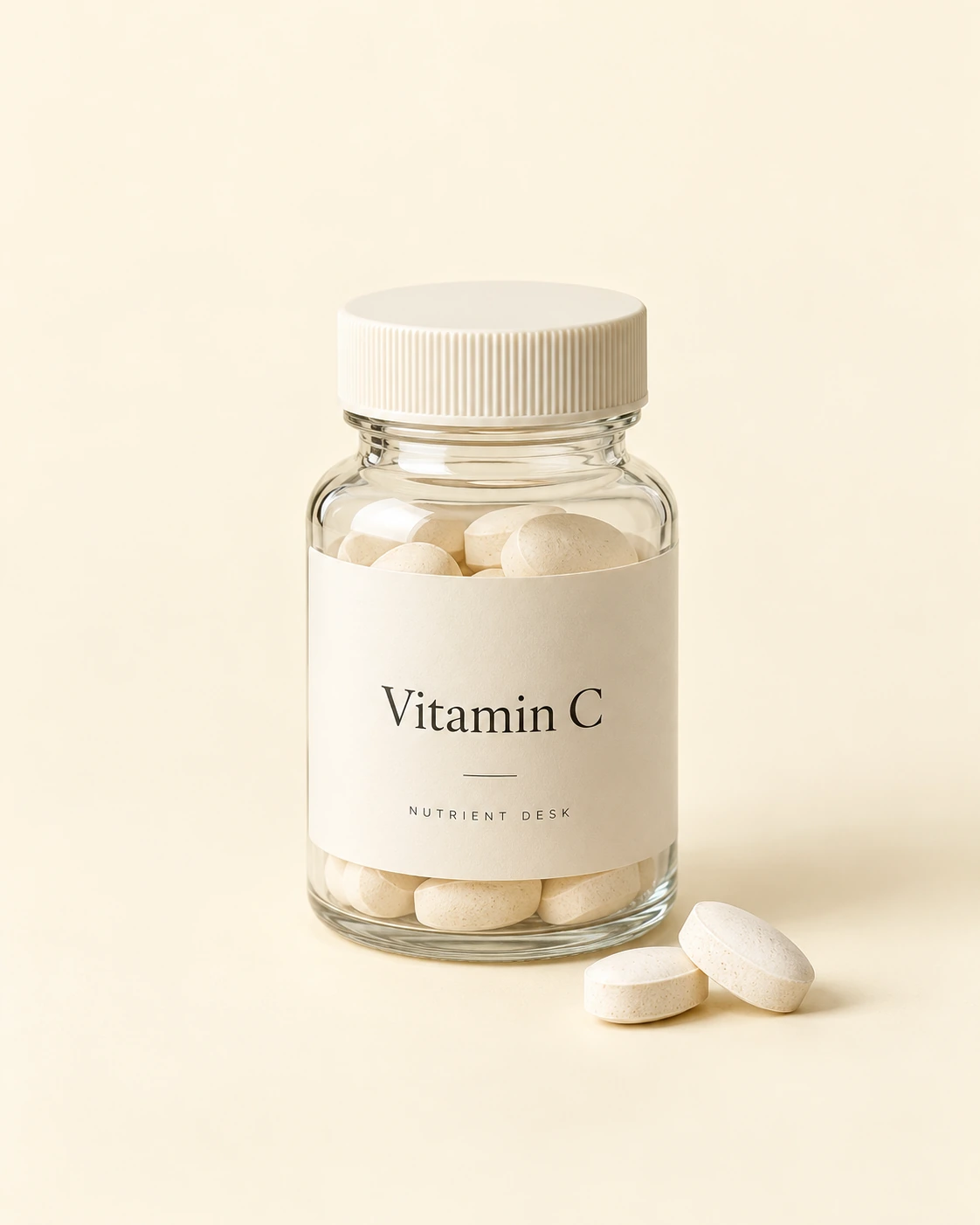
Vitamin C
Vitamin C, or ascorbic acid, is an essential water-soluble vitamin that humans cannot make, found in fruits and vegetables such as citrus, peppers and berries.
Also listed as Ascorbic Acid, Ascorbate, L-ascorbic acid
What it is studied for
The strongest rated effects first. Bars show the size of the effect, the letter grades the evidence, and each rating lists the studies behind it.
What does vitamin C do?
Vitamin C, also called ascorbic acid, is a water-soluble vitamin that humans must obtain from their diet. It helps make collagen, the structural protein needed for connective tissue and wound healing, and contributes to antioxidant and immune functions. It also improves absorption of nonheme iron, the form found in plant foods. 1
What changes when intake is too low?
Severe deficiency causes scurvy, with fatigue, fragile connective tissue and poor wound healing. Correcting a deficiency answers a different question from adding high doses when intake is already adequate. Vitamin C’s antioxidant activity helps explain research interest in chronic disease, but a mechanism alone cannot establish a preventive benefit. 1
Key studies
The most recent publications linked to Vitamin C's ratings.
Why people take it
SuppCo community snapshot, 2026-09-28. Reasons for use are not evidence that it works.
Questions people ask
Should vitamin C start only when a cold begins?
Trials starting after symptoms began have not shown a consistent benefit. 2
Is food vitamin C absorbed better than ascorbic acid?
NIH describes comparable bioavailability for food vitamin C and supplemental ascorbic acid. 1
Does vitamin C help absorb iron?
Yes, it improves absorption of nonheme iron from plant foods; high doses are a concern in hereditary iron overload. 1
Does water-soluble mean harmless?
No. High doses commonly cause gastrointestinal symptoms, and some medical conditions warrant extra caution. 1
Does a megadose improve absorption?
Fruit and vegetables supply vitamin C; progressively larger oral doses have a lower absorbed fraction. The absorption data do not establish an advantage for megadoses. 1
Related nutrients
 Vitamin E
 Zinc
 Copper
 Vitamin A
Sources
- Vitamin C: Fact Sheet for Health Professionals NIH Office of Dietary Supplements