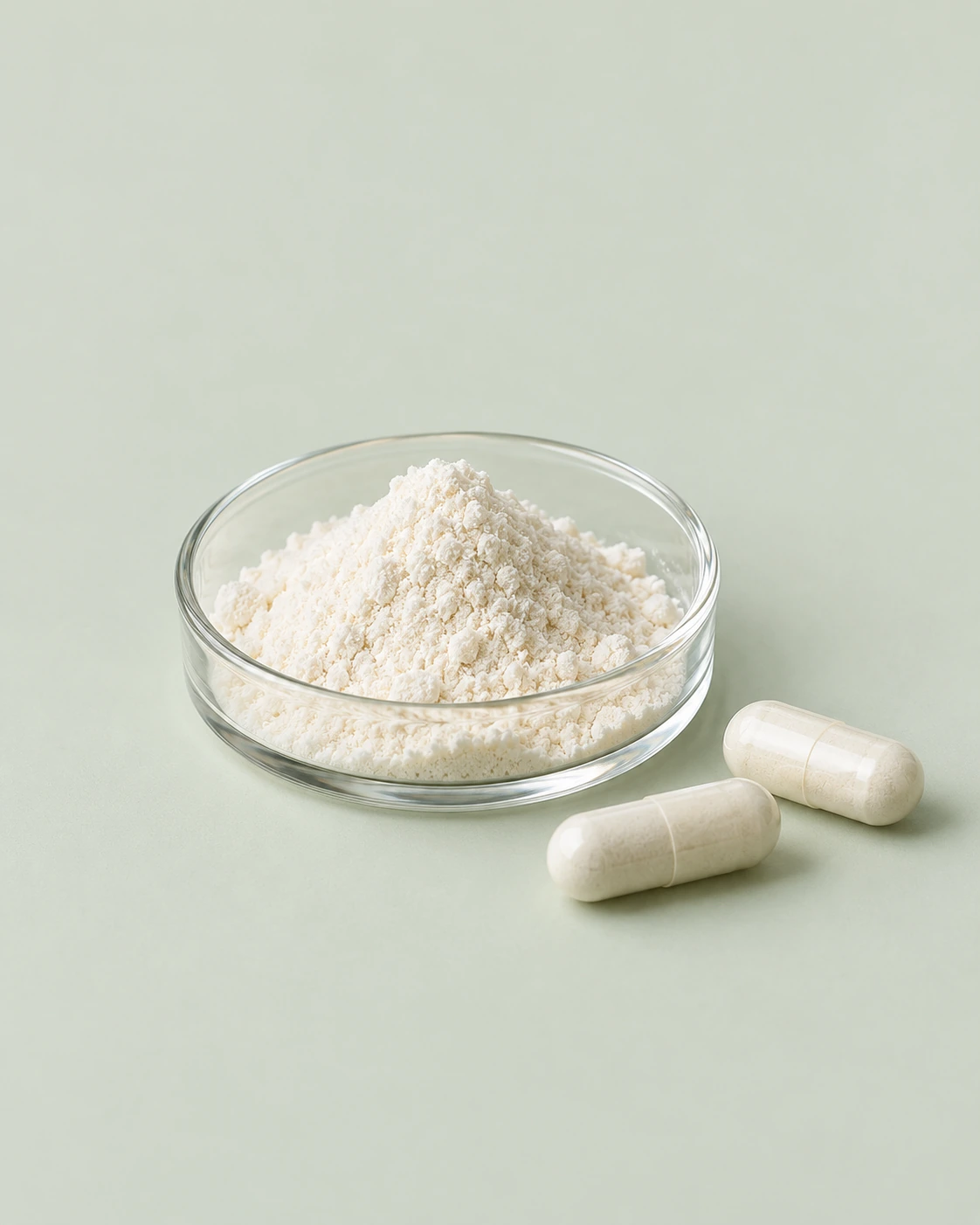
GABA
GABA (gamma-aminobutyric acid) is an amino acid the body makes from glutamate. It is the main inhibitory, or calming, messenger in the brain.
Also listed as Gamma-Aminobutyric Acid
What it is studied for
The strongest rated effects first. Bars show the size of the effect, the letter grades the evidence, and each rating lists the studies behind it.
Brain GABA and oral GABA
GABA is an inhibitory neurotransmitter, a chemical messenger that reduces nerve-cell activity. Whether oral GABA reaches the brain in meaningful amounts remains uncertain; its established role in the nervous system does not by itself prove that a supplement improves sleep. 1
Why people take it
SuppCo community snapshot, 2026-09-28. Reasons for use are not evidence that it works.
Questions people ask
Is 300 mg a recommended sleep dose?
It was the dose in one short trial, not an established recommendation for insomnia treatment. 2
Can GABA interact with blood-pressure medicine?
An additive blood-pressure-lowering effect is a concern raised by the safety review, rather than a proven interaction in a dedicated trial. 3
Is long-term use known to be harmless?
No. The 2025 diabetes trial recorded liver-enzyme elevations during six months of treatment. 4
Related nutrients
 L-Theanine
Sources
- Effects of Oral Gamma-Aminobutyric Acid (GABA) Administration on Stress and Sleep in Humans: A Systematic Review Frontiers in Neuroscience, 2020
- Safety and Efficacy of Gamma-Aminobutyric Acid from Fermented Rice Germ in Patients with Insomnia Symptoms: A Randomized, Double-Blind Trial Journal of Clinical Neurology, 2018