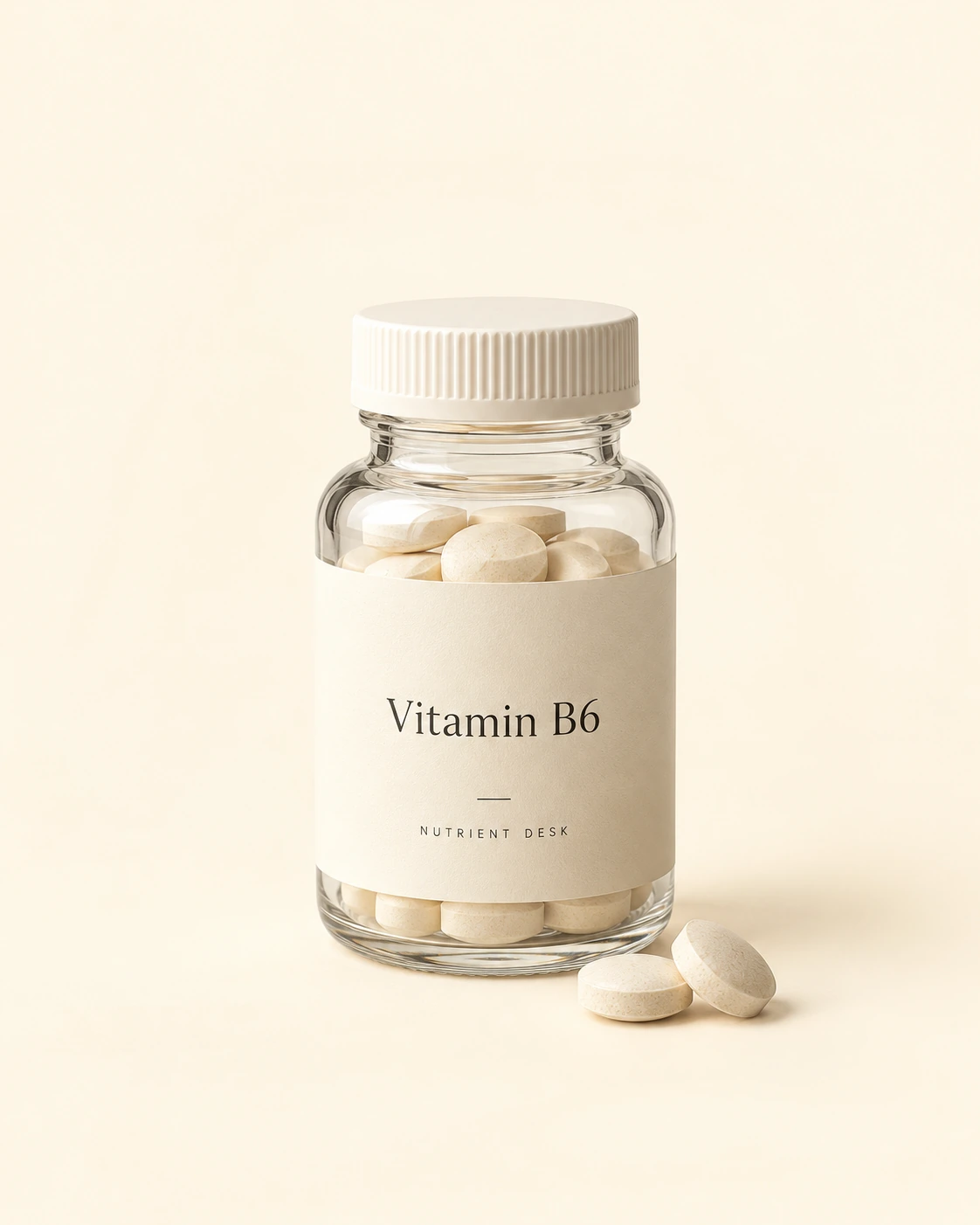
Vitamin B6
Vitamin B6 is an essential water-soluble vitamin with several forms, including pyridoxine and pyridoxal 5'-phosphate, found in fish, poultry, potatoes and bananas.
Also listed as pyridoxine, pyridoxamine, pyridoxal, pyridoxal phosphate
What it is studied for
The strongest rated effects first. Bars show the size of the effect, the letter grades the evidence, and each rating lists the studies behind it.
Why does the body need B6?
Vitamin B6 helps process amino acids and carbohydrates and make chemical messengers. It also works with other B vitamins in homocysteine metabolism. These are normal physiological functions, distinct from treating stress with a high-dose supplement. 1
Who is more likely to be short of B6?
Deficiency is uncommon and often accompanies other B-vitamin deficiencies. DGE identifies alcohol misuse, liver disease and certain medicines as risk factors; anemia and neurological problems can occur. 2
Why people take it
SuppCo community snapshot, 2026-09-28. Reasons for use are not evidence that it works.
Questions people ask
Can I get enough B6 from food?
DGE lists whole grains, nuts, peppers, fish and pork as useful sources. 2
Is 100 mg a suitable everyday dose?
It exceeds EFSA’s adult upper limit of 12 mg daily; a research dose is not a general intake recommendation. 3
Does the anxiety study prove B6 works?
No. Improvement within the B6 group did not translate into a statistically significant difference in change versus placebo. 4
Can a magnesium supplement contain B6?
Yes. TGA highlights magnesium combinations as a source people may overlook when adding up B6. 5
Related nutrients
 Vitamin B1
 Vitamin B12
 Vitamin B Complex
Sources
- FAQ Vitamin B6 DGE
- High-dose Vitamin B6 supplementation reduces anxiety and strengthens visual surround suppression Human Psychopharmacology, 2022
- Health supplements containing vitamin B6 can cause peripheral neuropathy Therapeutic Goods Administration, 2022