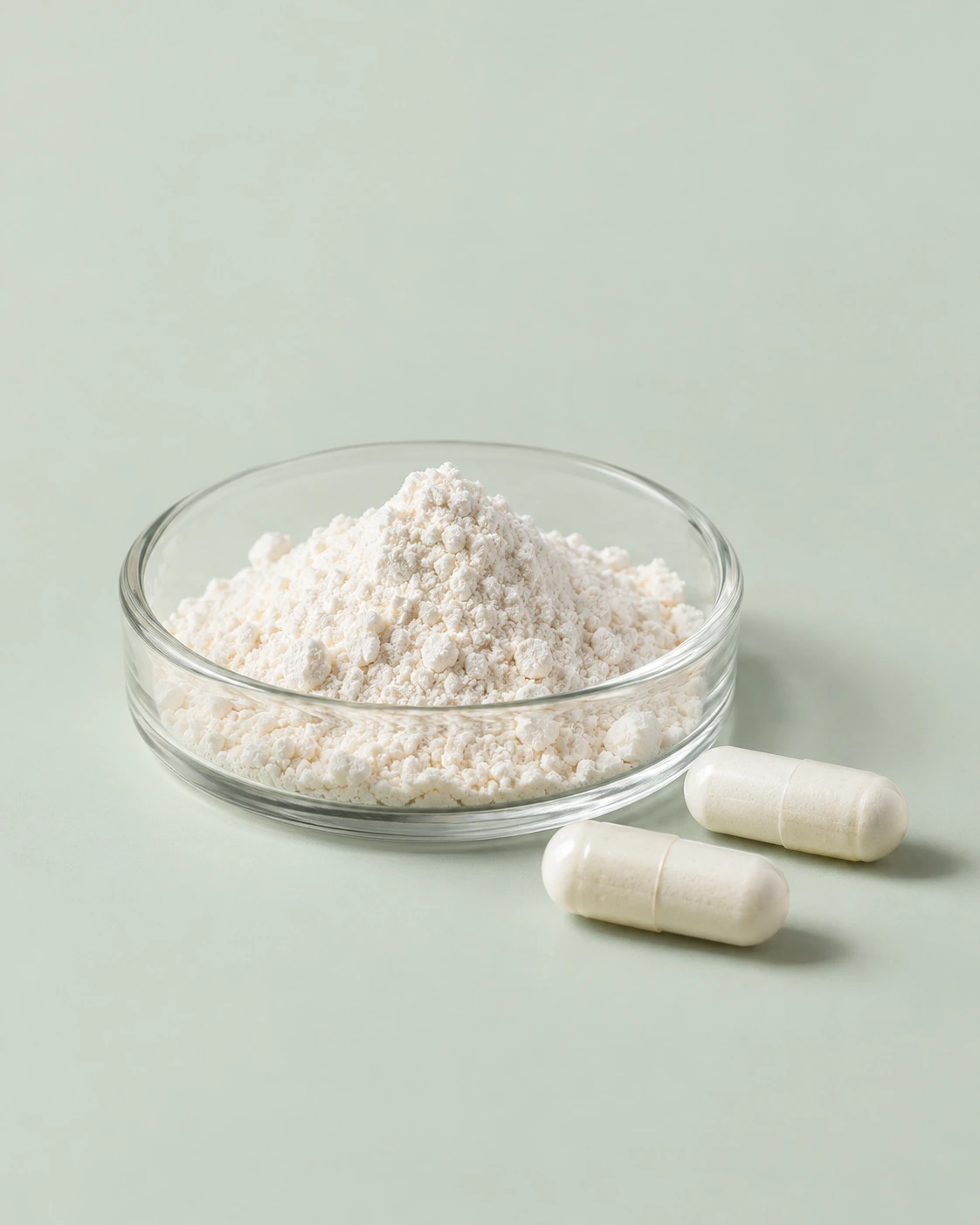
Creatine
Creatine is a compound the body makes from the amino acids arginine, glycine and methionine. It is stored in muscle and also comes from meat and fish.
Also listed as creatine monohydrate, creatine 2-oxopropanoate, a-methylguanidinoacetic acid
What it is studied for
The strongest rated effects first. Bars show the size of the effect, the letter grades the evidence, and each rating lists the studies behind it.
What does creatine actually do?
Creatine helps replenish ATP, the molecule cells use to supply energy. Its best-established sporting role is supporting repeated short, intense efforts such as lifting weights or sprinting. The body makes creatine, and food supplies some too. 1
In muscle, creatine can be stored as phosphocreatine, which helps regenerate ATP quickly. This explains the interest in hard efforts separated by short rests. It does not mean every feeling of low energy is a shortage of creatine. 1
Where does the evidence point?
The clearest practical evidence concerns creatine alongside resistance training. A meta-analysis in older adults found additional gains in strength and lean tissue compared with training plus placebo. Memory is another active research question, with a smaller and more variable evidence base. 2 3
Key studies
The most recent publications linked to Creatine's ratings.
Why people take it
SuppCo community snapshot, 2026-09-28. Reasons for use are not evidence that it works.
Questions people ask
Do I need a loading phase?
No. The German guidance describes a slower approach of 3–5 g daily over about 3–4 weeks to fill stores. Loading fills them faster but can increase stomach discomfort; these are protocol descriptions, not an individual prescription. 4
Is monohydrate better than expensive creatine forms?
It has the largest research base. NIH ODS has not found evidence that the named alternatives are superior in performance-related muscle uptake, digestibility, stability or safety. 1
Will creatine improve memory?
A meta-analysis found a small overall improvement, stronger in older participants, with no improvement in its younger subgroup. The studies differed substantially, so the result is not a promise of sharper thinking for everyone. 3
Does creatine damage the kidneys?
The 2026 review found higher creatinine without a significant change in filtration measured by Cr-EDTA. Existing kidney disease still warrants medical guidance, and supplement use should be part of interpreting tests. 4 5
Will it make me gain fat?
An early weight increase can reflect water retained in muscle cells, rather than body fat. A scale change alone does not describe body composition. 4
Does it replace training?
The older-adult meta-analysis compared creatine plus resistance training with placebo plus the same type of training. It demonstrates an additional benefit within training, not an equivalent substitute for it. 2
Sources
- Dietary Supplements for Exercise and Athletic Performance: Health Professional Fact Sheet NIH Office of Dietary Supplements
- Kreatin: Wirkung, Risiken und was beim Kauf wichtig ist Verbraucherzentrale, 2026
- Impact of creatine supplementation on kidney health: a systematic review and meta-analysis International Urology and Nephrology, 2026