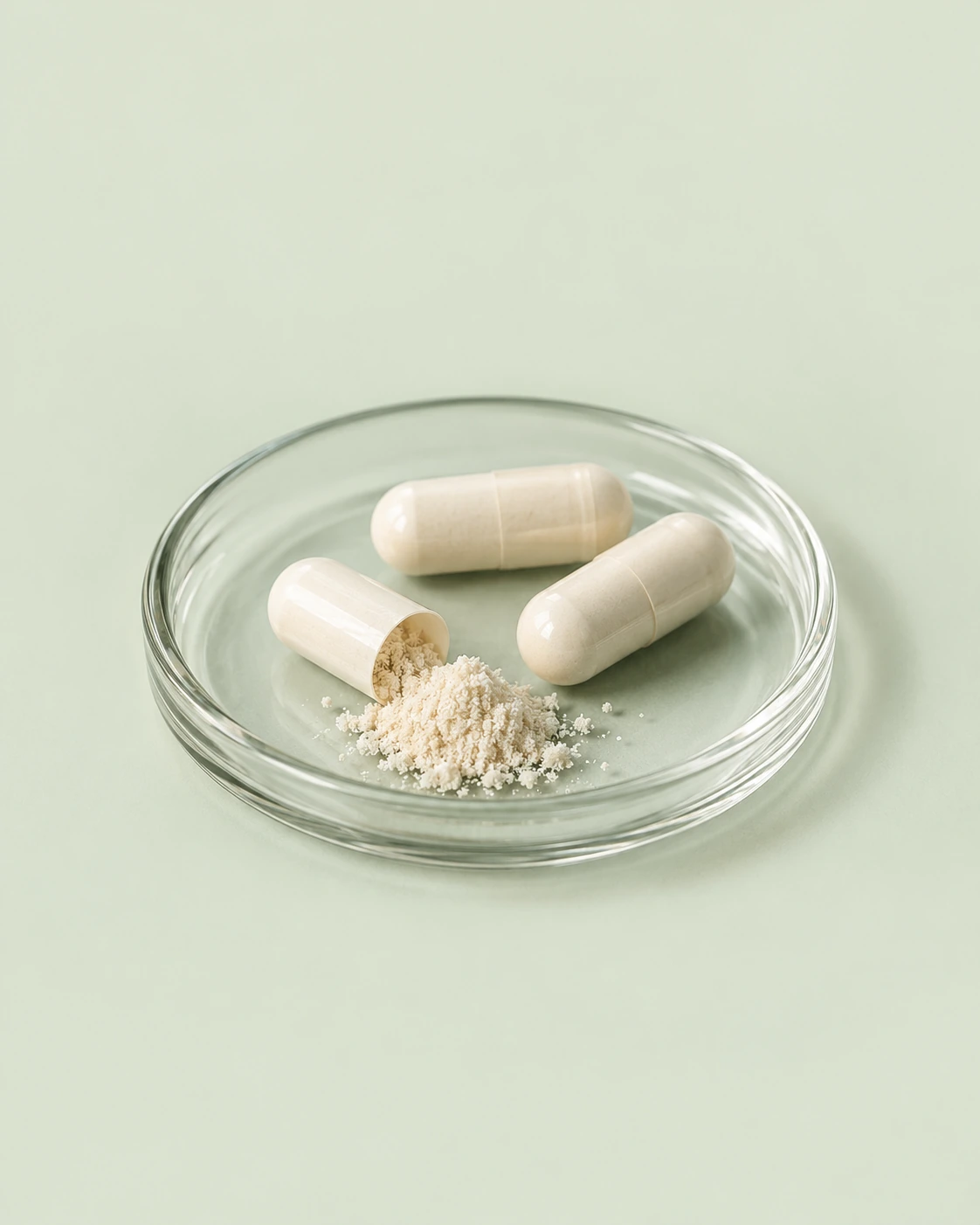
Postbiotics
Postbiotics are preparations of inactivated microorganisms, mostly bacteria, and the substances they produce or are made of.
What it is studied for
The strongest rated effects first. Bars show the size of the effect, the letter grades the evidence, and each rating lists the studies behind it.
What counts as a postbiotic?
Under the ISAPP definition, a postbiotic contains deliberately inactivated microbes or their cellular components and has a demonstrated health benefit. The identity of the microbes and the way they are processed matter: the term describes a preparation, not a single nutrient. 1
Why study nonliving microbes?
Cell structures can still interact with the immune system after a microbe dies. This helps explain the research interest, although identifying an active cell component does not establish which symptoms a finished product will improve. 2
Key studies
The most recent publications linked to Postbiotics's ratings.
Why people take it
SuppCo community snapshot, 2026-09-28. Reasons for use are not evidence that it works.
Questions people ask
Are postbiotics dead probiotics?
That shorthand misses the manufacturing step: a deliberately inactivated, tested preparation differs from a probiotic that has lost viability in storage. 2
Is there a standard daily dose?
Studies use different organisms, manufacturing methods and quantities. The dose belongs to the tested preparation; the reporting review does not identify one interchangeable dose for the category. 3
Can they help children avoid infections?
Two trials in a pediatric review found fewer episodes of diarrhea with heat-inactivated L. paracasei CBA L74. The authors still judged the overall evidence too limited for a broad recommendation. 4
Will a microbiome change explain symptom relief?
The young-adult diarrhea trial found both symptom and microbiome changes. Their coexistence is a useful research lead, but does not by itself prove that a particular microbial change caused the improvement. 5
 Prebiotics
 Bifidobacterium lactis
 Probiotics