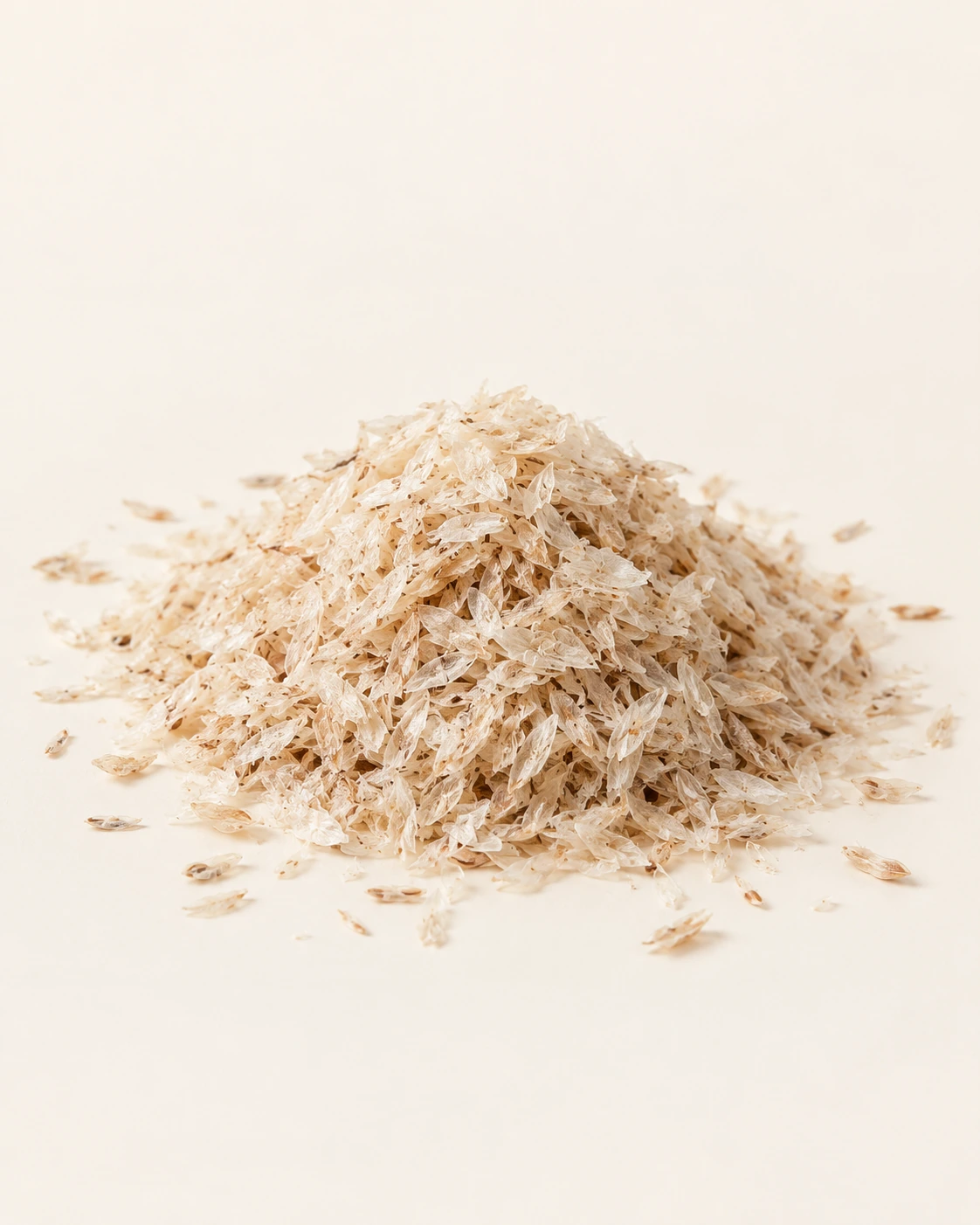
Psyllium
Psyllium comes from the seed husk of Plantago ovata. Its gel-forming fiber holds water in the bowel.
Also listed as Psyllium Husk, Psyllium Fiber, Metamucil (brand name), ispaghula
What it is studied for
The strongest rated effects first. Bars show the size of the effect, the letter grades the evidence, and each rating lists the studies behind it.
What are psyllium husks?
Psyllium comes from the seed husk of Plantago ovata. Its gel-forming fiber holds water in the bowel; this physical action helps explain its use for constipation. 1
What can a bowel treatment do?
Ispaghula products such as Fybogel soften and bulk up stool, making passage easier. The NHS describes an onset of two to three days rather than immediate relief. 2
Key studies
The most recent publications linked to Psyllium's ratings.
Why people take it
SuppCo community snapshot, 2026-09-28. Reasons for use are not evidence that it works.
Questions people ask
Can it replace cholesterol medicine?
The cited trials establish an LDL effect, not equivalence to medicines or prevention of heart attacks. 3
What if constipation persists?
NHS guidance advises medical review if symptoms do not improve or worsen after three days of Fybogel. 4
Can it be used in pregnancy?
NHS guidance says most adults can use Fybogel, including during pregnancy and breastfeeding; individual contraindications still matter. 5
Can medicines be taken at the same time?
NHS instructions for Fybogel specify at least 30 minutes before or after other medicines; the actual product instructions matter. 4
Related nutrients
 Inulin
 Fiber
Sources
- The Effect of Psyllium Husk on Intestinal Microbiota in Constipated Patients and Healthy Controls International Journal of Molecular Sciences, 2019 · Study record
- Effect of psyllium (Plantago ovata) fiber on LDL cholesterol and alternative lipid targets, non-HDL cholesterol and apolipoprotein B American Journal of Clinical Nutrition, 2018