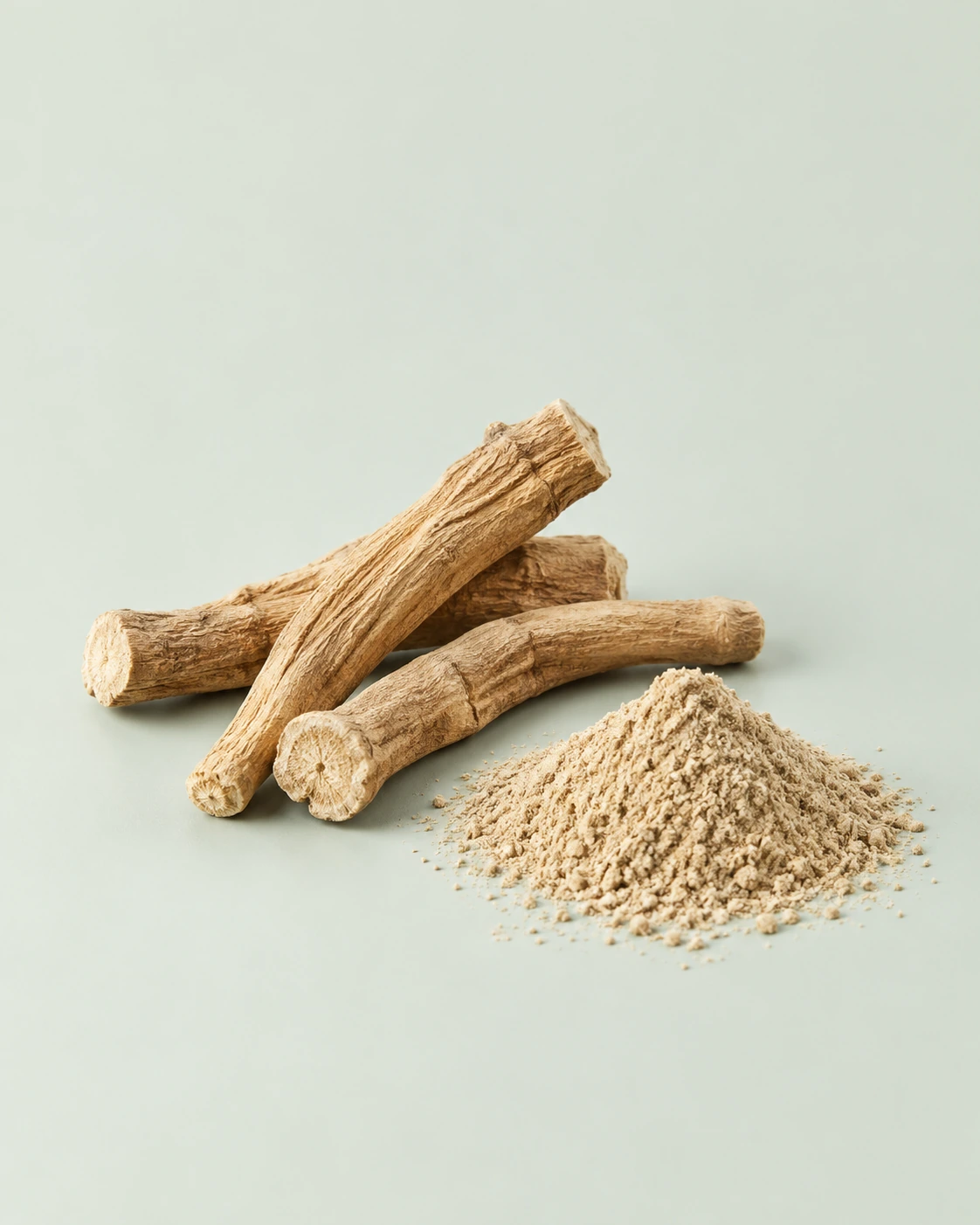
Ashwagandha
Ashwagandha, Withania somnifera, is a shrub from the nightshade family used in Ayurvedic medicine. Supplements usually contain root extract.
Also listed as Withania Somnifera, Indian Ginseng, Smell of Horse, Winter Cherry
What it is studied for
The strongest rated effects first. Bars show the size of the effect, the letter grades the evidence, and each rating lists the studies behind it.
What is ashwagandha?
Ashwagandha, Withania somnifera, is a shrub used in Ayurvedic medicine. Supplements usually contain root extract, sometimes combined with leaf extract; the two plant parts have different chemical compositions. 1
What does “adaptogen” mean?
The term loosely describes a product intended to help people resist stress. Ashwagandha contains withanolides and other compounds, but identifying these substances does not establish which extract will improve a person’s symptoms. 1 2
Key studies
The most recent publications linked to Ashwagandha's ratings.
Why people take it
SuppCo community snapshot, 2026-09-28. Reasons for use are not evidence that it works.
Questions people ask
How soon might sleep improve?
The sleep trials lasted six to twelve weeks, with stronger results in studies lasting at least eight weeks. They do not establish a reliable first-night effect. 3
Is 600 mg a safe daily dose?
That amount was studied, but it is not a universal safety limit. The BfR could not derive a safe intake level from the available evidence. 2 3
Does it lower cortisol?
Some trials found lower blood cortisol alongside lower perceived stress. This does not make cortisol lowering a treatment target for everyone. 1
Can it be combined with sleep medicines?
Interactions with sedatives are possible, and ashwagandha itself can cause drowsiness. NCCIH recommends discussing complementary products with health professionals. 4
Sources
- Ashwagandha: Is it helpful for stress, anxiety, or sleep? NIH Office of Dietary Supplements